Bulldog
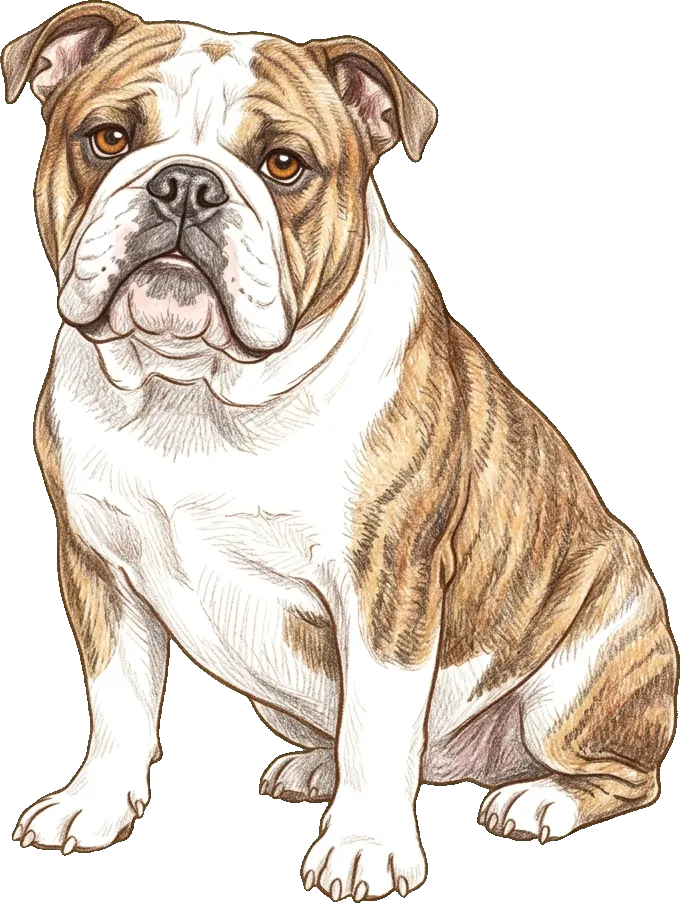
The English Bulldog is a heavy-set, gentle companion known for a relaxed approach to life and a deep affection for their families. Living well with this breed means managing their flat-faced features by keeping them cool, cleaning their facial folds daily, and sticking to short, slow-paced walks. This guide covers what to expect from their independent temperament, steady routine needs, and easygoing nature around the house.
Daily-care planners
House-training
Challenging to house-trainEnglish Bulldogs are widely known as one of the slower breeds to housetrain. A very fixed daily schedule and a lot of patience are key — corrections rarely speed things up.
Walks
Low exercise needsBulldogs overheat quickly and tolerate heat and humidity poorly — short sessions during the coolest parts of the day are safest. They're generally slow-paced and content with modest distances. Avoid humid or hot conditions; even brief exertion can be tiring for them. In mild weather they can be surprisingly enthusiastic walkers.
Plan walksTemperament
English Bulldogs are a flat-faced breed known for a calm, easygoing demeanor and a steady, independent streak. Owners commonly find that short, cool-weather outings are exactly what this dog prefers, rather than intense physical activity.
Because their exercise and mental stimulation needs are low, they adapt exceptionally well to apartment living as long as they can stay cool. They are generally quiet indoors and are content to spend much of their day resting, requiring only modest, slow-paced walks to stay happy.
This breed tends to have a high affinity for children, making them a very patient and gentle presence in family households, provided interactions are supervised. They can be a good match for first-time or senior owners who want a relaxed companion, though their stubbornness during house-training requires a highly consistent, patient routine rather than corrections.
With a naturally low prey drive and a polite, tolerant attitude toward other dogs, they usually coexist peacefully with other household pets. While not highly playful with other animals, they are rarely reactive, preferring a harmonious and quiet environment.
Originating in England as a British icon, today's Bulldog has been bred strictly as a gentle family companion. In broad English-speaking markets where housing varies from urban flats to suburban homes, their primary constraint is not space, but climate. They overheat quickly and tolerate heat or humidity poorly, making air conditioning essential during warm summers, along with walking only in the coolest parts of the day.
What life with a Bulldog asks of you
Grooming & coat
- Grooming effort
- High grooming
- Shedding
- Seasonal shedding
- Coat
- Short coat
Exercise & enrichment
- Daily exercise
- Low exercise needs
- Mental stimulation
- Low mental stimulation
- Trainability
- Independent thinker
Temperament & sociability
- With people
- Politely friendly
- With dogs
- Tolerant of other dogs
- With kids
- Gentle with children (always supervise)
- Barking / noise
- Quiet
- Chase instinct
- Low prey drive
- Time alone
- Moderate separation-anxiety risk
Home & climate fit
- Hot weather
- Low heat tolerance
- Cold weather
- Low cold tolerance
- House-training
- Challenging to house-train