Bull Terrier
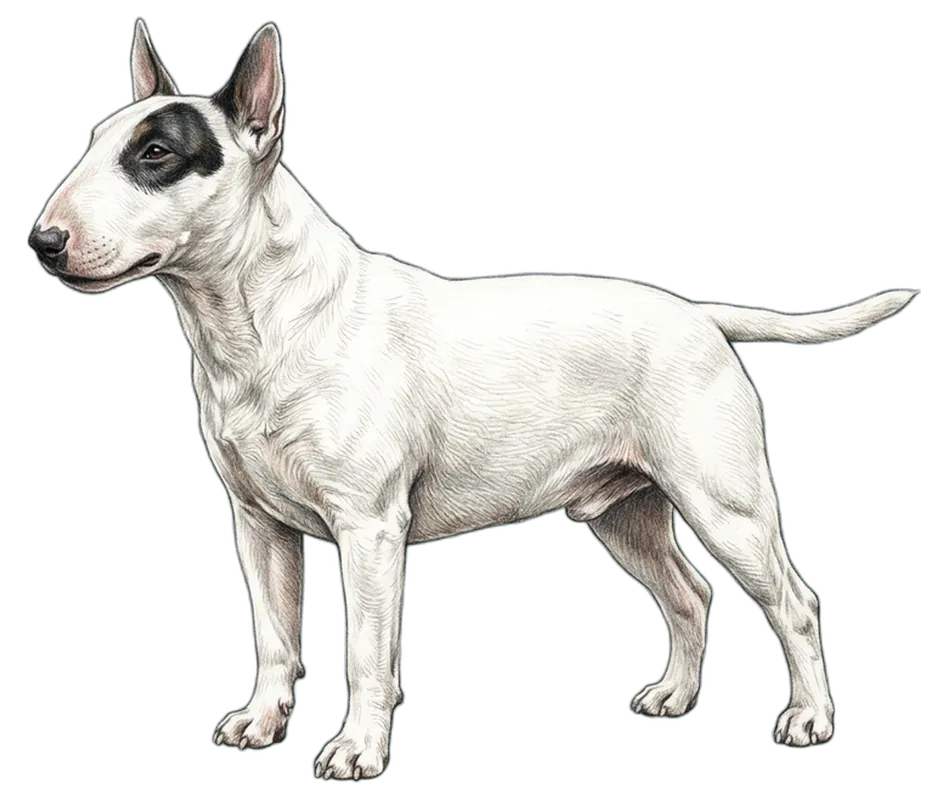
The Bull Terrier is an unmistakable, egg-headed original — developed in nineteenth-century England from Old English Terrier and Bulldog crosses, then refined by breeder James Hinks into an all-white "gentleman's companion" prized for its muscular build and clownish personality. Living well with one means welcoming a playful, mischievous, deeply people-attached dog with an independent streak, real prey drive, and genuinely high needs for both exercise and mental engagement. Structured training, daily enrichment, and thoughtful introductions to other dogs let the breed's comical, affectionate side shine while keeping everyone — human, canine, and the Bull Terrier itself — safe and content.
Daily-care planners
House-training
Moderate to house-trainHouse-training a Bull Terrier calls for patience with an independent thinker: this breed responds far better to consistent, upbeat routines and generous reward than to any form of correction. A predictable schedule — frequent trips outside after meals, naps, and play, paired with calm praise the instant the job is done — builds the habit steadily, and a crate or confined space between outings helps prevent unsupervised accidents while the routine takes hold. Consistency across every household member speeds things along.
Walks
High exercise needsBull Terriers need real daily exercise to match their energy and to help settle a busy mind, but leash management is the main consideration: their prey drive and dog-selectivity mean a secure leash, well-fitted harness, and alert handling around loose dogs and small animals are essential rather than optional. Early, patient leash training pays off, since this muscular, independent breed is much easier to guide calmly as a puppy than to redirect as a strong adult. On warm days, especially for lighter-coated dogs, favor cooler hours and watch for sun sensitivity; folding in sniffing time or a short training game during the walk gives the mental engagement this breed thrives on, alongside the physical exercise.
Plan walksTemperament
The Bull Terrier traces to nineteenth-century England, where crosses of the Old English Terrier and Bulldog produced a game, athletic dog for the sporting pits of the day; breeder James Hinks later bred the all-white "White Cavalier" into the comical, elegant companion recognizable today by its distinctive egg-shaped head. That working past left a dog that is tenacious, courageous, and full of character, but generations of purposeful companion breeding have shaped a temperament that, at its best, is clownish, affectionate, and deeply attached to family — many Bull Terriers are famous for their sense of humor and their determination to be near their favorite people.
That same history means the breed is an independent thinker rather than an eager-to-please one, so patient, consistent, reward-based training pays off far better than repetition or correction-heavy methods. Bull Terriers can be selective with unfamiliar or same-sex dogs, so early, careful socialization, close supervision at introductions, and secure management around other animals matter throughout life; a strong prey drive around small, fast-moving animals is also typical of the breed and worth planning around. With their own family, most are warm and playful, though their exuberance and strength mean play with small children should always be supervised.
Bull Terriers carry real energy and a genuinely high need for mental work — daily exercise paired with training games, puzzle feeders, and varied enrichment keeps a busy mind satisfied and helps prevent the compulsive behaviors, like tail-chasing, that the breed can be prone to when under-stimulated. Their short coat needs little upkeep, but light or all-white coats are more sun-sensitive, so sun protection matters on bright days, and cooler weather calls for a coat or shortened outdoor time.
What life with a Bull Terrier asks of you
Grooming & coat
- Grooming effort
- Low grooming
- Shedding
- Seasonal shedding
- Coat
- Short coat
Exercise & enrichment
- Daily exercise
- High exercise needs
- Mental stimulation
- High mental stimulation
- Trainability
- Independent thinker
Temperament & sociability
- With people
- Enthusiastically friendly
- With dogs
- Selective with other dogs
- With kids
- Good with considerate children (supervise)
- Barking / noise
- Quiet
- Chase instinct
- High prey drive
- Time alone
- Moderate separation-anxiety risk
Home & climate fit
- Hot weather
- Moderate heat tolerance
- Cold weather
- Low cold tolerance
- House-training
- Moderate to house-train