Boykin Spaniel
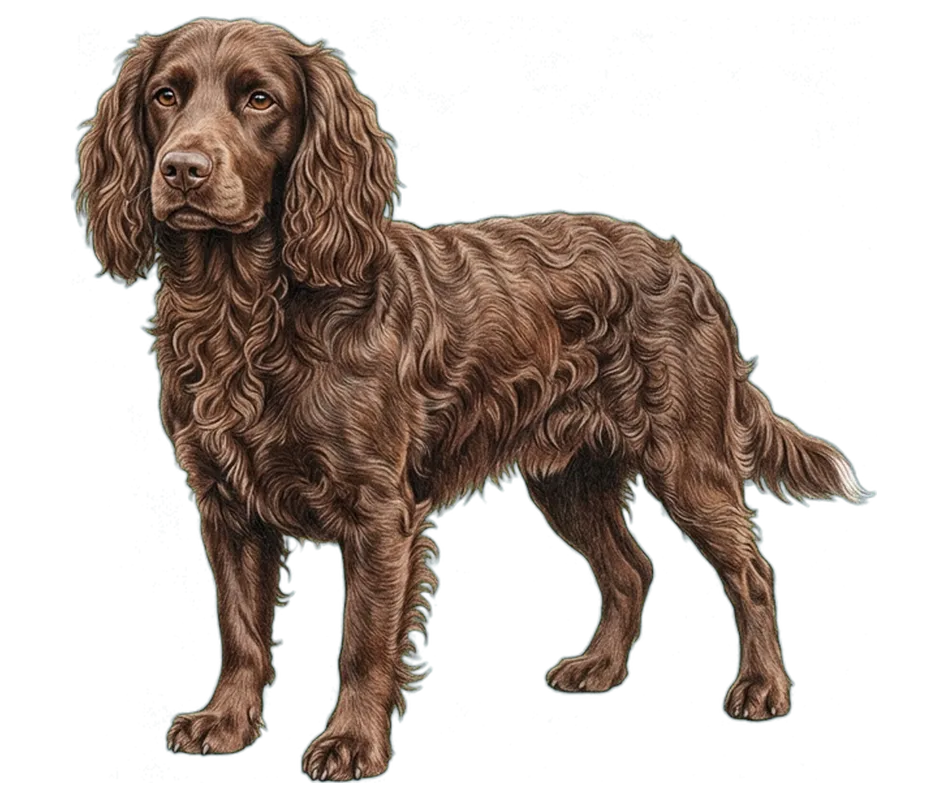
The Boykin Spaniel was developed in early-1900s South Carolina to flush and retrieve turkey and waterfowl from the swamps and rivers of the Lowcountry, and that working heritage still shapes the breed today: a compact, enthusiastic, water-loving companion that bonds closely with its people and wants a job to do. Living well with one means embracing an eager, biddable dog that thrives on daily exercise, mental engagement, and close family involvement, alongside a curly, feathered coat that needs regular brushing and ears that deserve routine care. Given that outlet, the Boykin Spaniel repays it with steady, cheerful companionship both in the field and at home.
Daily-care planners
House-training
Easy to house-trainHouse-training a Boykin Spaniel is usually straightforward, since their eagerness to please and sharp intelligence make them quick to pick up a consistent routine. Frequent, calm trips outside after meals, naps, and play sessions, paired with warm praise for every success, build the habit efficiently; because the breed is sensitive, patience and encouragement work far better than correction. A predictable schedule and close supervision during the early weeks carry most Boykin puppies through reliably.
Walks
High exercise needsThe Boykin Spaniel's walking needs are shaped by its sporting heritage: this is an active, high-energy dog that wants substantial daily exercise, not a short stroll. A satisfying routine blends brisk walks with off-leash play, retrieving games, or swimming whenever it is available, since water-based activity taps into a deep-seated instinct and burns energy efficiently. Mental engagement matters as much as distance — scent games, training reps, or retrieving drills help settle a mind bred to work alongside a person. Keep sessions structured and consistent from puppyhood, since a Boykin that learns loose-leash manners and calm greetings early is far easier to walk enjoyably as an adult, and consider that their curly coat can collect burrs and debris on brushy or wooded trails.
Plan walksTemperament
The Boykin Spaniel emerged in the early twentieth century near Camden, South Carolina, where hunters needed a smaller, boat-friendly dog able to flush and retrieve turkey and waterfowl from swampy Lowcountry terrain. That purpose shaped a dog that is energetic, biddable, and deeply people-oriented — the breed's own nickname, "the dog that doesn't rock the boat," speaks to a temperament built for close teamwork rather than independence.
At home, Boykins are affectionate, enthusiastic, and eager to please, forming strong bonds with their families and generally welcoming visitors and other dogs with friendly curiosity. Their intelligence and sensitivity mean they respond best to consistent, reward-based training; early, positive socialization helps channel their sporting-dog drive and enthusiasm into good household manners. Left without enough outlet, that same energy and attachment can show up as restlessness or clinginess, so plenty of engagement and companionship matter as much as physical exercise.
Bred to work in and around water, Boykin Spaniels typically love to swim and retrieve, and their curly, feathered coat needs regular brushing to prevent mats along with routine ear checks given their floppy ears. They are generally warm and patient with the children they are raised alongside, though as with any energetic breed, supervision and gentle handling both ways help play stay safe and enjoyable for everyone.
What life with a Boykin Spaniel asks of you
Grooming & coat
- Grooming effort
- Moderate grooming
- Shedding
- Seasonal shedding
- Coat
- Medium coat
Exercise & enrichment
- Daily exercise
- High exercise needs
- Mental stimulation
- High mental stimulation
- Trainability
- Eager to please
Temperament & sociability
- With people
- Enthusiastically friendly
- With dogs
- Sociable with other dogs
- With kids
- Gentle with children (always supervise)
- Barking / noise
- Moderately vocal
- Chase instinct
- High prey drive
- Time alone
- Moderate separation-anxiety risk
Home & climate fit
- Hot weather
- High heat tolerance
- Cold weather
- Moderate cold tolerance
- House-training
- Easy to house-train