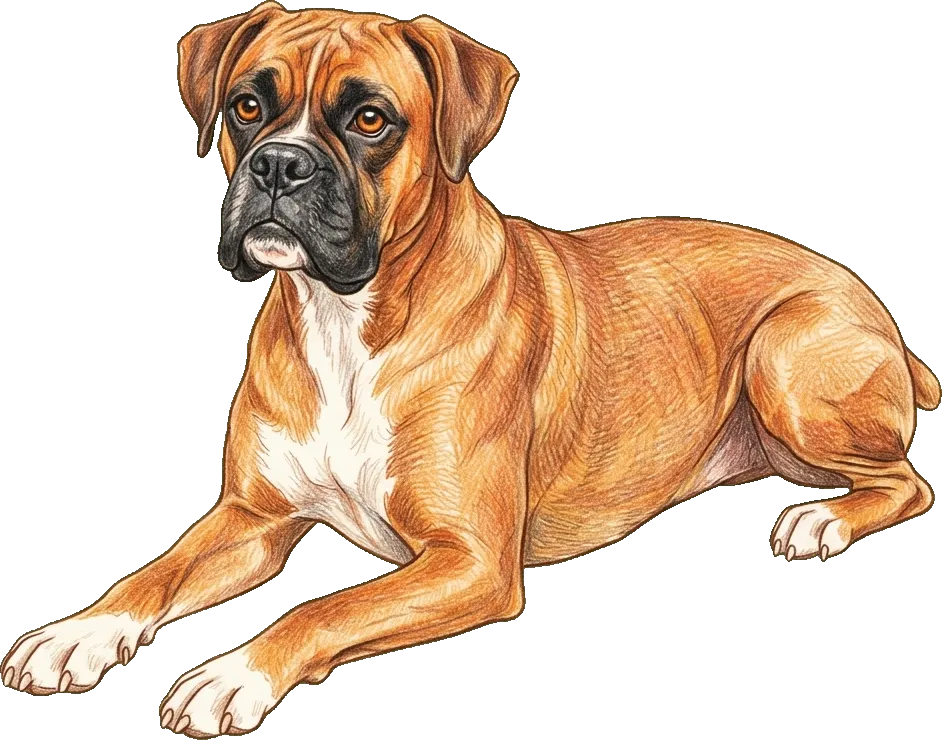
Boxer
The Boxer is a highly affectionate, short-coated companion known for keeping its puppy-like exuberance well into adulthood. Living happily with this energetic breed means committing to high daily exercise and mental stimulation, while remembering their moderately flat face requires them to stay cool in warm weather.
Daily-care planners
House-training
Moderate to house-trainBoxers stay in their puppy phase for a long time, meaning physical bladder control develops more slowly than their enthusiasm. Extra trips between 2–5 months help bridge the gap.
Walks
High exercise needsPlayful and athletic with a brachycephalic (flat-faced) build that limits heat tolerance — avoid midday walks in warm weather and watch for heavy panting as a cue to rest. In cool conditions they have good stamina and enjoy energetic, brisk outings. Their exuberant personality makes them fun walking companions once leash manners are established.
Plan walksTemperament
Boxers are enthusiastic, people-oriented dogs that maintain a playful personality for years. They are moderately vocal and balance biddability with an independent streak, requiring consistent positive training.
With a large 23–36 kg build and high energy, they thrive with space but can adapt to apartments if their significant physical and mental needs are met daily. In cool conditions, they offer good stamina and make fun walking companions once leash manners are established.
Their exuberance suits active households, though they should be supervised around small children to prevent accidental knock-overs. Because they are intensely devoted to their people, they carry a high separation-anxiety risk and need a home where they are rarely left alone.
Boxers can be selective with other dogs, benefiting from careful introductions. They have a moderate prey drive and can often live peacefully with cats if raised together under supervised guidance.
Developed in 19th-century Germany from the Bullenbeisser type as a versatile working and companion dog, this heritage demands daily engagement. For those in urban flats or suburban homes, brisk daily walks are essential, though their moderately flat faces mean owners must avoid midday heat and let them rest when panting.
What life with a Boxer asks of you
Grooming & coat
- Grooming effort
- Low grooming
- Shedding
- Seasonal shedding
- Coat
- Short coat
Exercise & enrichment
- Daily exercise
- High exercise needs
- Mental stimulation
- High mental stimulation
- Trainability
- Balanced
Temperament & sociability
- With people
- Enthusiastically friendly
- With dogs
- Selective with other dogs
- With kids
- Good with considerate children (supervise)
- Barking / noise
- Moderately vocal
- Chase instinct
- Moderate prey drive
- Time alone
- High separation-anxiety risk
Home & climate fit
- Hot weather
- Low heat tolerance
- Cold weather
- Low cold tolerance
- House-training
- Moderate to house-train