Bouvier des Flandres
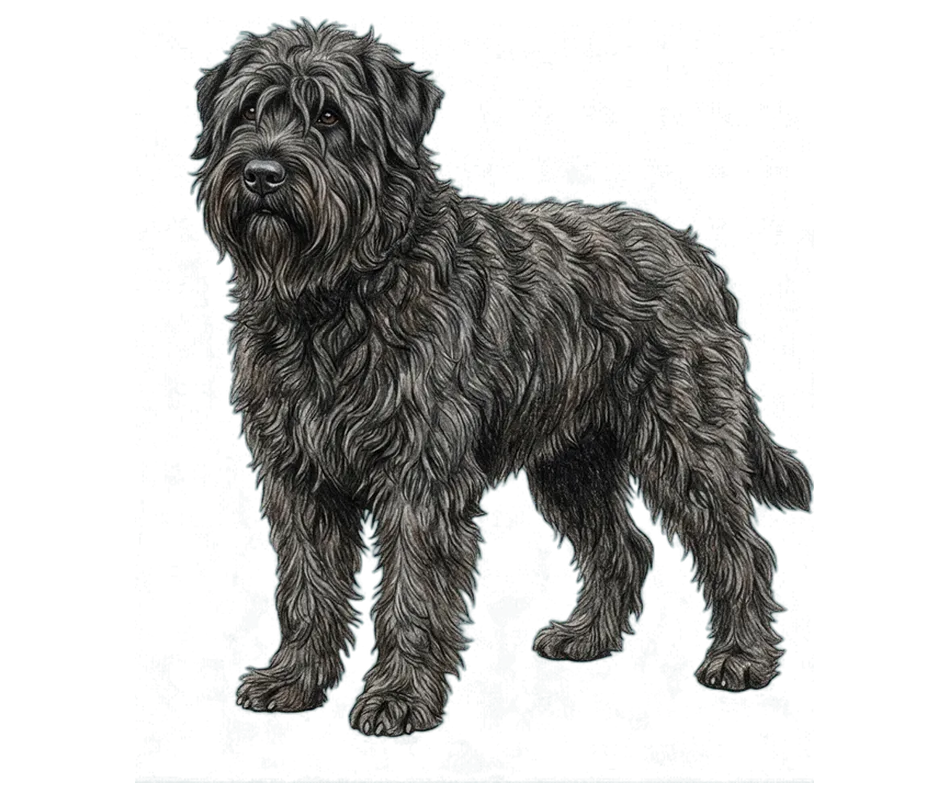
The Bouvier des Flandres is a powerfully built farm dog from the Franco-Belgian border region, bred to drove cattle, pull carts, and guard the homestead — work that produced a dog of calm, steady confidence rather than flash or fuss. Living well with one means embracing a substantial, independent-minded companion under that famous shaggy double coat, alongside genuinely high grooming needs, a meaningful daily exercise habit, and real sensitivity to heat. Early socialization and calm, consistent leadership bring out the loyal, watchful, and gentle family guardian this breed is meant to be.
Daily-care planners
House-training
Moderate to house-trainHouse-training a Bouvier des Flandres is usually manageable, since they are intelligent and settle into routines well once the pattern is clear, though their independent streak means they benefit from consistency more than repetition. Frequent, calm trips outside after meals, naps, and play, paired with warm praise for every success, build the habit faster than any correction — and because this is a large-breed puppy whose body is still maturing, patience with the occasional accident goes a long way. A predictable schedule and close supervision in the early weeks are what carry it home.
Walks
High exercise needsThe Bouvier's walking needs center on giving that working heritage a real job, not just covering distance — brisk daily walks, varied routes, and purposeful activities like tracking games or basic herding exercises keep this capable dog satisfied in body and mind. Heat is the bigger constraint than exercise volume: the dense double coat that suits a Belgian farm winter makes hot or humid conditions genuinely taxing, so favor the cool of early morning or evening and treat heavy panting or slowing as a cue to head home and offer water. Keep early sessions low-impact while a large-breed puppy's joints are still developing, and start comfortable harness and loose-leash training young, since a calm, well-mannered walk is far easier to teach a growing puppy than a full-grown, powerfully built adult. A consistent daily routine suits this steady, farmhand temperament well.
Plan walksTemperament
The Bouvier des Flandres was developed by farmers along the Franco-Belgian border to drive cattle, haul carts, and guard the farm — an all-purpose job that shaped a dog of practical intelligence and unflappable calm rather than nervous energy. At home this shows up as a steady, dignified companion that bonds closely with its family, often positioning itself where it can keep an eye on the household, content and settled once its people are near.
That farmhand heritage also means a Bouvier is a genuine independent thinker, naturally watchful and reserved with strangers rather than instantly friendly, so early, positive socialization and calm, consistent, reward-based training matter from puppyhood. They are intelligent and capable, but respond far better to patient, fair guidance than to repetition or pressure; harsh handling only makes an already independent-minded dog more resistant. With other dogs they can be selective, particularly with dogs of the same sex, so thoughtful introductions and ongoing supervision help multi-dog households run smoothly.
Bouviers carry real working drive — daily exercise and a job to do, whether that is a structured walk, tracking, herding-style games, or obedience work, keep both body and mind satisfied. Their dense, wiry double coat sheds only lightly but is a genuinely high-maintenance commitment, needing brushing several times a week plus periodic trimming to stay mat-free and healthy, and that same thick coat makes hot, humid weather something to actively plan around. They are typically gentle and patient with the children they are raised alongside, though their size and sturdy build mean play with small children benefits from supervision so no one is knocked over by an enthusiastic dog.
What life with a Bouvier des Flandres asks of you
Grooming & coat
- Grooming effort
- High grooming
- Shedding
- Seasonal shedding
- Coat
- Medium coat
Exercise & enrichment
- Daily exercise
- High exercise needs
- Mental stimulation
- High mental stimulation
- Trainability
- Balanced
Temperament & sociability
- With people
- Reserved with strangers
- With dogs
- Selective with other dogs
- With kids
- Gentle with children (always supervise)
- Barking / noise
- Quiet
- Chase instinct
- Moderate prey drive
- Time alone
- Moderate separation-anxiety risk
Home & climate fit
- Hot weather
- Low heat tolerance
- Cold weather
- High cold tolerance
- House-training
- Moderate to house-train