Borzoi
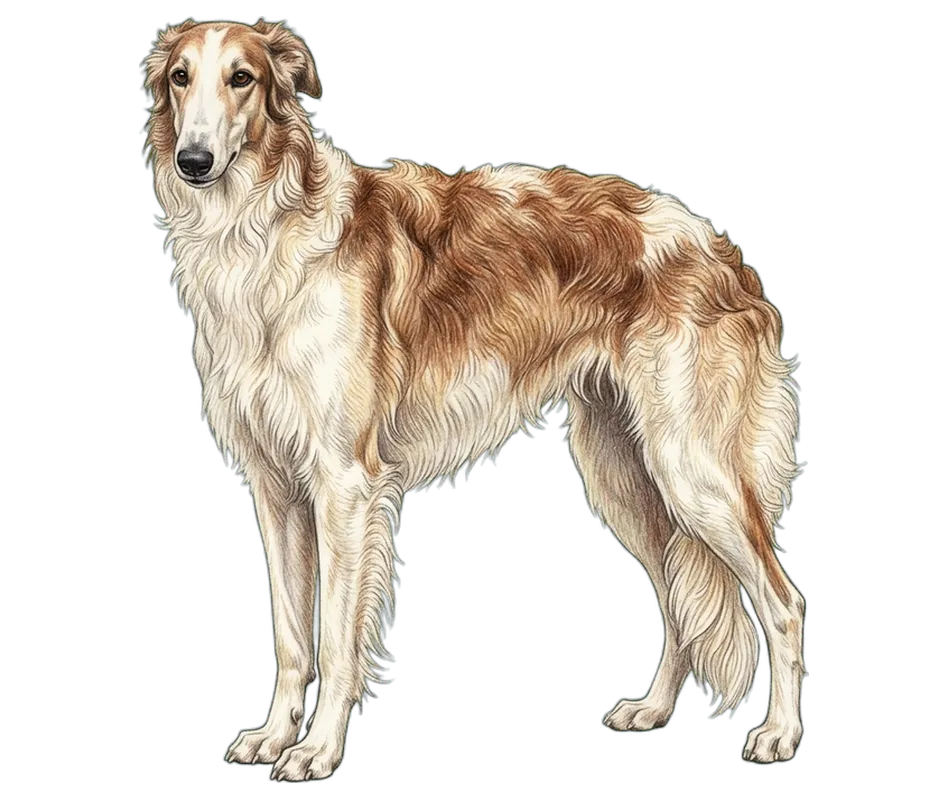
The Borzoi is a tall, elegant sighthound bred by Russian nobility to course game across open country by sight and speed rather than scent — a heritage that shaped a dog who is a burst of controlled athleticism outdoors and a quiet, dignified presence at home. Living well with one means honoring a breed built for sprinting: a secure, fenced space for safe off-leash bursts, sturdy leash habits for everywhere else, and a coat that trades minimal daily fuss for a couple of thorough weekly brushings. Calm, sensitive, and deeply bonded to its people, a Borzoi rewards patient, gentle guidance with a serene, undemanding companion who is just as content curled up on a soft bed as it is flying across a field.
Daily-care planners
House-training
Moderate to house-trainHouse-training a Borzoi generally goes smoothly with patience, though their independent, sighthound mindset means they respond better to a calm, consistent routine than to repetition drills. Frequent, unhurried trips outside after meals, naps, and play, paired with quiet praise for success, build the habit steadily; because Borzoi are sensitive to tone, avoid scolding for accidents and simply reset the routine. A predictable schedule and close supervision during the early weeks carry a puppy through this stage comfortably.
Walks
High exercise needsThe Borzoi's walking needs center on controlled bursts of speed rather than distance or duration. A couple of moderate daily walks keep this athletic sighthound content, but the real outlet is occasional safe, off-leash sprinting in a securely fenced area, since their sight-driven chase instinct makes recall around loose animals unreliable at best. A sturdy harness, a leash used consistently from puppyhood, and calm, low-impact sessions while the joints are still developing all help; because a lean, deep-chested dog can overheat or tire its joints if pushed too hard too young, favor short, cool-weather outings and let sprint sessions come later, once a veterinarian confirms the dog is fully grown.
Plan walksTemperament
Developed over centuries by Russian nobility to course wolves and hare across open steppe, the Borzoi is built for explosive speed rather than stamina or scent work. That heritage shows in a dog of quiet, self-possessed confidence: at home Borzoi are gentle, composed, and often described as cat-like in their calm independence, content to observe a room from a comfortable perch rather than seek constant attention.
As sighthounds, Borzoi are intelligent but independent thinkers, not reflexively obedient, and they respond best to patient, reward-based training with plenty of consistency; harsh corrections tend to shut down such a sensitive breed rather than motivate it. They are typically reserved with strangers rather than outgoing, warming up in their own time, and deeply devoted to their own family once trust is established. Their strong sight-driven prey drive means small, fast-moving animals can trigger an instant chase, so secure fencing and reliable leash habits matter far more than off-leash recall training alone.
Borzoi are gentle with the children they are raised with, though their tall, narrow build and low body fat mean boisterous play should be supervised so no one is bumped or the dog is not roughly handled. With other dogs they generally do well, especially those raised together, though introductions to small pets warrant care given their hunting heritage. Their long, silky coat needs a thorough brushing once or twice a week to stay comfortable and mat-free, and their lean frame and coat mean they tolerate cold well but need shade, water, and rest breaks in hot weather.
What life with a Borzoi asks of you
Grooming & coat
- Grooming effort
- Moderate grooming
- Shedding
- Seasonal shedding
- Coat
- Long coat
Exercise & enrichment
- Daily exercise
- High exercise needs
- Mental stimulation
- Moderate mental stimulation
- Trainability
- Independent thinker
Temperament & sociability
- With people
- Reserved with strangers
- With dogs
- Tolerant of other dogs
- With kids
- Good with considerate children (supervise)
- Barking / noise
- Quiet
- Chase instinct
- High prey drive
- Time alone
- Moderate separation-anxiety risk
Home & climate fit
- Hot weather
- Low heat tolerance
- Cold weather
- High cold tolerance
- House-training
- Moderate to house-train