Biewer Terrier
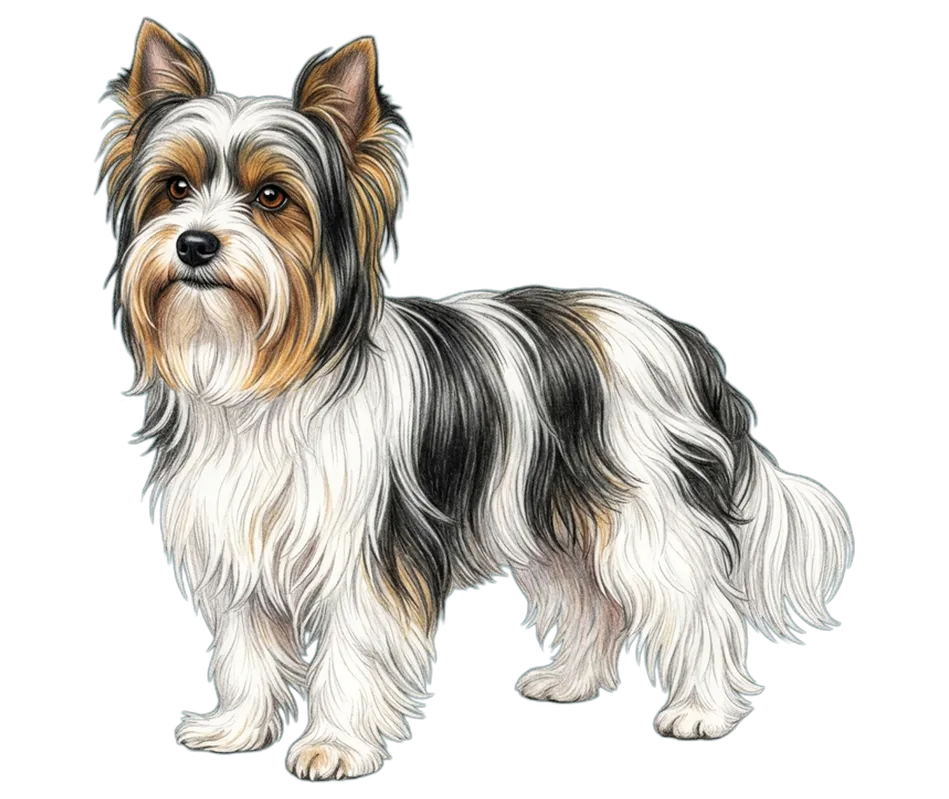
The Biewer Terrier is a small, longhaired companion breed developed in Germany in 1984 from a tricolor color variation within Yorkshire Terrier lines, prized today for its flowing silky coat and an outsized, devoted personality. Bred purely to be a companion rather than a working terrier, this is a lively, alert little dog that bonds closely with its people and does best as a true member of the household rather than left alone for long stretches. Living well with one means matching its high grooming needs and modest but real energy with gentle handling, patient positive training, and the joint, liver, and airway checks that help small toy breeds stay comfortable across a long life.
Daily-care planners
House-training
Challenging to house-trainHouse-training a Biewer Terrier takes real patience: like many toy breeds, a tiny bladder holds little at a time, and a touch of terrier independence doesn't always prioritize an owner's schedule. A consistent routine — frequent trips outside after meals, naps, and play, paired with warm praise for every success and close indoor supervision to catch early signals — moves things along faster than any correction. Many owners use indoor pad training as a bridge during puppyhood or in bad weather, then phase it out as the habit solidifies.
Walks
Moderate exercise needsThe Biewer Terrier's main walking constraints are size and temperature, not stamina. Short, frequent outings paired with indoor play satisfy their moderate energy better than one long trek, and a well-fitted harness — never a neck collar — protects their delicate windpipe from the tracheal strain toy breeds are prone to. Their single coat offers little insulation, so a sweater or coat is a kindness on cold or wet days, and hot pavement or midday sun calls for shaded routes and a slower pace. Because they are so small, staying alert around larger off-leash dogs and giving them a wide, calm berth on shared trails keeps walks safe and enjoyable.
Plan walksTemperament
The Biewer Terrier traces back to 1984 in Germany, where breeders Werner and Gertrud Biewer noticed tricolor, piebald-patterned puppies born within a line of Yorkshire Terriers and set out to establish them as a distinct companion breed. That companion-only heritage — bred to be a devoted lap dog rather than a working ratter — shows in a temperament that stays playful, whimsical, and deeply people-oriented well into adulthood.
At home, a Biewer is an enthusiastic, affectionate shadow that wants to be wherever its family is, greeting visitors with curiosity and confidence rather than reserve. A small streak of terrier independence can surface during training, so consistent, reward-based sessions and early socialization channel that spirited nature into a well-mannered adult; harsh corrections tend to backfire on such a sensitive little dog. Left alone too long or without enough companionship, Biewers can become anxious, so building comfortable alone-time habits from puppyhood matters as much as any other part of raising one.
This is a naturally alert, vocal little watchdog that tends to announce visitors and new sounds, a trait that responsive, positive training can shape into a few confirming barks rather than prolonged alarm. Despite their pocket size, Biewers carry real energy and enjoy daily walks, play sessions, and activities like short trick-training or rally that satisfy both body and mind without demanding a strenuous routine.
Their long, silky, single coat has no undercoat, which means minimal shedding but frequent brushing to prevent mats, along with only moderate protection from heat and limited insulation against cold — a sweater on chilly walks is a kindness, not a fashion statement. Biewers are typically warm and sociable with children and other pets when raised together, but their small, delicate frame calls for gentle handling and supervised play so an enthusiastic child or larger dog never accidentally causes injury.
What life with a Biewer Terrier asks of you
Grooming & coat
- Grooming effort
- High grooming
- Shedding
- Minimal shedding
- Coat
- Long coat
Exercise & enrichment
- Daily exercise
- Moderate exercise needs
- Mental stimulation
- Moderate mental stimulation
- Trainability
- Balanced
Temperament & sociability
- With people
- Enthusiastically friendly
- With dogs
- Sociable with other dogs
- With kids
- Good with considerate children (supervise)
- Barking / noise
- Vocal
- Chase instinct
- Moderate prey drive
- Time alone
- High separation-anxiety risk
Home & climate fit
- Hot weather
- Moderate heat tolerance
- Cold weather
- Low cold tolerance
- House-training
- Challenging to house-train