Belgian Sheepdog
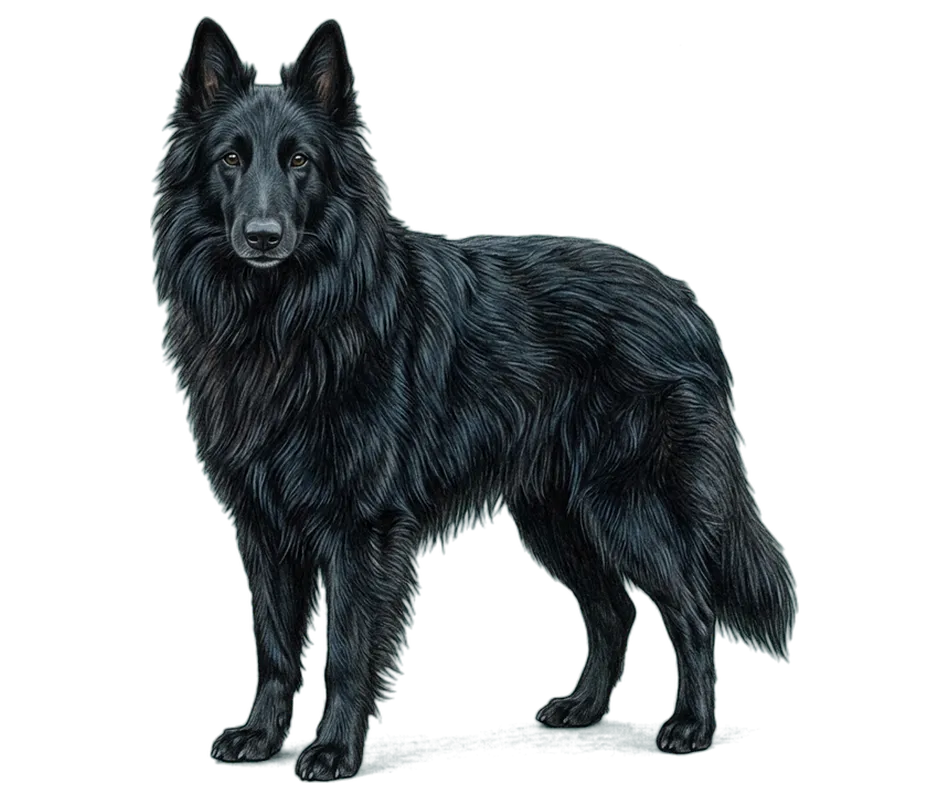
The Belgian Sheepdog — also known as the Groenendael, one of four Belgian Shepherd varieties — was refined as an all-purpose Belgian farm dog: herding livestock, guarding property, and staying in constant close contact with its people. Its long, solid-black double coat looks dramatic but is naturally weatherproof and less demanding than it appears, while the sharp, athletic dog underneath needs real daily exercise, structured mental work, and a family willing to be its constant companion rather than a background presence. Given that outlet, plus patient early socialization, a Belgian Sheepdog becomes a watchful, deeply loyal, and remarkably capable partner.
Daily-care planners
House-training
Easy to house-trainHouse-training a Belgian Sheepdog is usually quick, since this is a breed bred to work closely with people and eager to figure out what is being asked of it. A predictable schedule — frequent trips outside after meals, naps, and play, with warm praise for every success — tends to click fast with such an attentive learner. Consistency in the early weeks, rather than correction, is what carries the routine home.
Walks
High exercise needsThe main walking challenge with a Belgian Sheepdog is meeting its energy and drive, not managing size. This breed needs substantial daily exercise — brisk walks, jogging, or structured activities like agility or herding work — and a bored, under-exercised Belgian Sheepdog is far more likely to become reactive on leash or fixate on joggers, cyclists, and small animals. Early leash training paired with impulse-control games helps keep that herding instinct in check on walks. Their coat handles cold well, but warm, humid weather calls for shorter, cooler-hour outings and access to water, since the dark coat absorbs heat readily. A predictable daily routine that combines physical exercise with mental engagement keeps this quick-minded breed settled and content.
Plan walksTemperament
The Belgian Sheepdog was developed in late nineteenth-century Belgium as a versatile farm dog: herding livestock, guarding property, and keeping close watch over its people, work that produced a breed prized for sharp intelligence and unwavering loyalty. That heritage shows today in a dog that is deeply attentive to its family, quick to pick up new skills, and naturally inclined to keep an eye on its surroundings and the people in them.
This alertness also means Belgian Sheepdogs are typically reserved with strangers and can be wary of unfamiliar people or animals, so early, broad socialization and confident, reward-based training are essential to raise a well-adjusted adult. They are eager to please and learn fast, which makes them rewarding to train, but that same sensitivity means harsh corrections tend to backfire; clear, consistent guidance works far better. Their herding instinct can show up as nipping at heels or chasing joggers, cyclists, or other animals, so channeling that drive into structured activities and supervising introductions with other pets pays off.
Bred for all-day farm work, Belgian Sheepdogs have real exercise and mental stimulation needs — a walk around the block will not satisfy this breed. They thrive with activities like obedience, agility, herding trials, or scent work that engage both body and mind, and without that outlet they can become anxious, vocal, or find their own less welcome projects. Their solid black double coat sheds seasonally and is more weather-resistant than fussy, though the dark coat can run warm in hot, humid conditions, so exercise is best timed for cooler parts of the day. Belgian Sheepdogs can be excellent, watchful companions for children they are raised alongside, though their herding tendencies mean interactions with very young kids benefit from supervision and guidance.
What life with a Belgian Sheepdog asks of you
Grooming & coat
- Grooming effort
- Moderate grooming
- Shedding
- Heavy shedding
- Coat
- Long coat
Exercise & enrichment
- Daily exercise
- High exercise needs
- Mental stimulation
- High mental stimulation
- Trainability
- Eager to please
Temperament & sociability
- With people
- Reserved with strangers
- With dogs
- Selective with other dogs
- With kids
- Good with considerate children (supervise)
- Barking / noise
- Moderately vocal
- Chase instinct
- High prey drive
- Time alone
- High separation-anxiety risk
Home & climate fit
- Hot weather
- Moderate heat tolerance
- Cold weather
- High cold tolerance
- House-training
- Easy to house-train