Beauceron
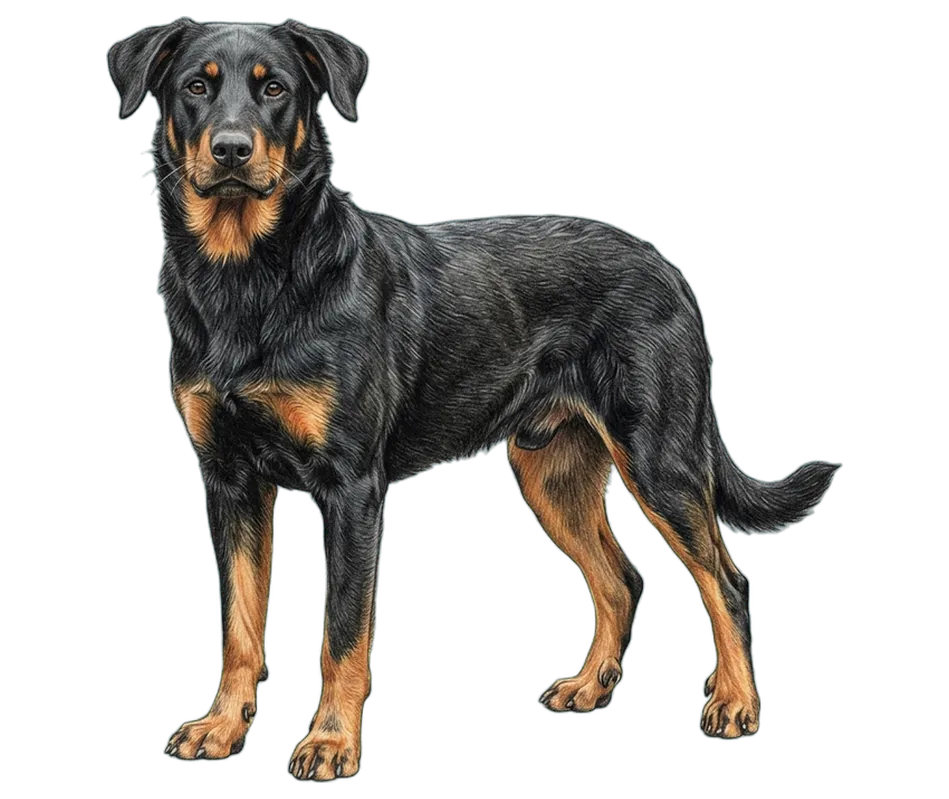
The Beauceron is a large, athletic French herding and guardian breed — bred to drive livestock across open plains by day and watch the farm by night, a heritage that shaped a dog who is confident, intelligent, and deeply loyal to its family. Living well with one means committing to a working breed's needs: vigorous daily exercise, real mental stimulation, early and thorough socialization, and confident, consistent guidance. Given that investment, a Beauceron rewards its people with a steady, protective, endlessly capable companion.
Daily-care planners
House-training
Moderate to house-trainHouse-training a Beauceron is usually straightforward, since this is an intelligent, eager-to-learn breed that picks up routine quickly. A predictable schedule — calm trips outside after meals, naps, and play, with warm praise for every success — builds the habit efficiently, and consistency matters more than repetition for a dog this quick to generalize a pattern. Crate training or close supervision during the early weeks helps prevent accidents while the habit sets.
Walks
High exercise needsThe Beauceron's walking needs go well beyond a stroll around the block: this working breed thrives on vigorous daily exercise — long walks, jogging, hiking, or structured activities like herding trials or agility — paired with mental engagement along the way. Because the herding instinct can surface as chasing or nipping at joggers, cyclists, or other animals, early leash training and recall work in varied, distraction-rich settings pay off for life. A sturdy harness and consistent handling matter early too, since a Beauceron grows into a large, strong adult, and habits taught as a puppy are far easier to set than to retrain later. Pairing physical exercise with a mental task — a training session, a sniff-focused route, or a job to do — keeps this breed genuinely content.
Plan walksTemperament
The Beauceron, or Berger de Beauce, was developed in the plains of central France to herd and guard livestock over long working days, later serving as a French military and police dog — a background that shaped a breed of notable intelligence, stamina, and self-assurance. At home this heritage shows up as a dog that bonds closely and loyally with its family, often shadowing a favorite person from room to room, while staying naturally watchful of anything unfamiliar.
That guardian instinct means Beaucerons are typically reserved with strangers and can be selective with unfamiliar dogs, so extensive, positive early socialization is essential to raise a confident adult rather than an overly suspicious one. They are quick learners who think for themselves, and they do best with confident, consistent, reward-based guidance rather than harsh correction, which can make an intelligent, sensitive dog like this shut down or push back. As a herding breed, some individuals show an instinct to chase or herd moving things — children, cyclists, other pets — so early training channels that drive constructively.
Beaucerons carry real working-dog energy: they need substantial daily exercise plus tasks that engage their minds, whether that is structured training, herding work, scent games, or dog sports. A tired, mentally satisfied Beauceron is a calm, easygoing housemate; an under-exercised one can become restless or destructive. They are typically affectionate and patient with the children they are raised alongside, though supervision matters given their size, strength, and herding tendencies.
What life with a Beauceron asks of you
Grooming & coat
- Grooming effort
- Low grooming
- Shedding
- Seasonal shedding
- Coat
- Short coat
Exercise & enrichment
- Daily exercise
- High exercise needs
- Mental stimulation
- High mental stimulation
- Trainability
- Eager to please
Temperament & sociability
- With people
- Reserved with strangers
- With dogs
- Selective with other dogs
- With kids
- Gentle with children (always supervise)
- Barking / noise
- Moderately vocal
- Chase instinct
- Moderate prey drive
- Time alone
- Moderate separation-anxiety risk
Home & climate fit
- Hot weather
- Moderate heat tolerance
- Cold weather
- High cold tolerance
- House-training
- Moderate to house-train