Basset Hound
The Basset Hound is a gentle, sociable scent hound built low to the ground and ruled by its remarkable nose. Living well with one means working with that independent, scent-led nature rather than against it — steady house-training, weight management to protect the long back, and routine ear care are the daily realities behind this breed's easy-going charm.
Daily-care planners
House-training
Challenging to house-trainHouse-training a Basset takes patience. The breed's independent streak and strong nose mean a puppy is easily distracted outdoors and may treat the process as optional. Consistent schedules, generous praise, and rewarding every success outside work far better than scolding. Cold or wet days can stall progress, so plan for extra time and keep a good-humored, steady routine.
Walks
Moderate exercise needsA Basset walks to smell the world, so outings are about enrichment as much as distance. Let the dog set a relaxed, sniffing pace on a secure harness and lead — a determined nose can override recall entirely. Keep sessions moderate to protect the long back and heavy frame, and watch weight closely, since extra pounds strain the spine and joints. Bassets handle mild weather well but tire in heat and humidity, so choose cooler parts of the day in summer. Daily walks still matter: they keep this food-loving hound at a healthy weight and give that remarkable nose the workout it craves.
Plan walksTemperament
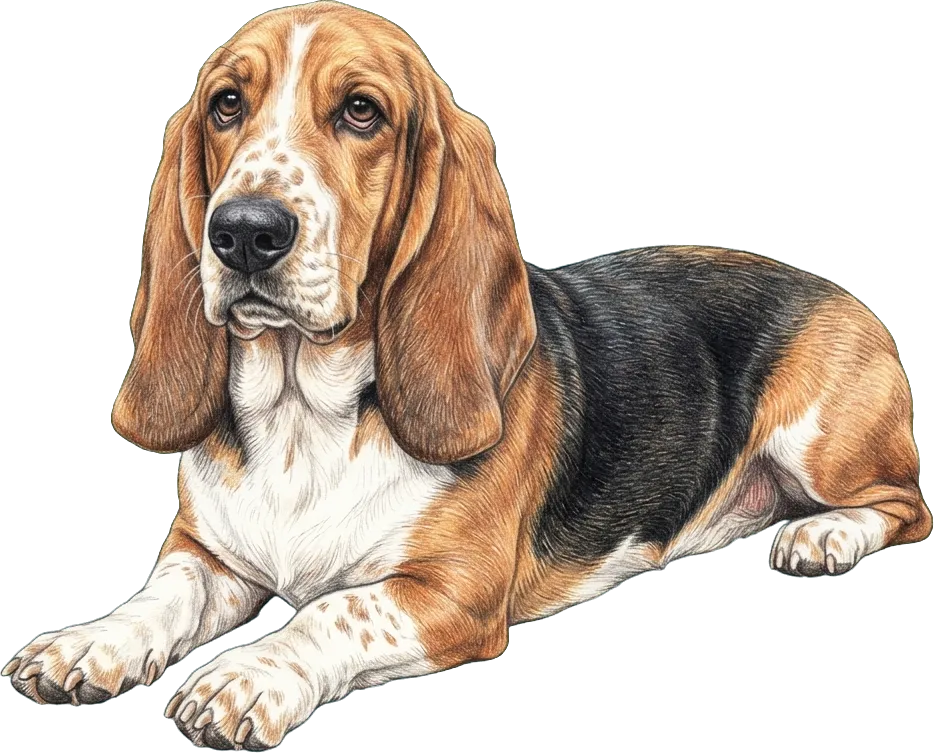
Bred in France and Britain to trail rabbit and hare on foot, the Basset Hound carries one of the most powerful noses in the dog world and a patient, methodical way of using it. At home this becomes a calm, affectionate companion that bonds closely with its people and generally welcomes visitors, children, and other dogs with an easy, sociable temperament.
That same hunting heritage makes the Basset an independent thinker. It is not unwilling to learn — it simply weighs whether a request is more interesting than the scent it has just found. Short, upbeat, food-rewarded sessions hold its attention far better than repetition or corrections, and a securely fenced yard matters, because a Basset on a trail can become pleasantly deaf to recall.
Bassets are famously vocal, using a deep bay to greet visitors or express boredom; this is normal hound communication, and it eases when the dog has enough company and activity. As pack animals at heart they dislike long stretches alone and do best where someone is around for much of the day. Their heavy build and long back reward careful management — keeping the dog lean, discouraging jumps on and off furniture, and offering ramps protects the spine over a lifetime.
What life with a Basset Hound asks of you
Grooming & coat
- Grooming effort
- Moderate grooming
- Shedding
- Seasonal shedding
- Coat
- Short coat
Exercise & enrichment
- Daily exercise
- Moderate exercise needs
- Mental stimulation
- Moderate mental stimulation
- Trainability
- Independent thinker
Temperament & sociability
- With people
- Enthusiastically friendly
- With dogs
- Sociable with other dogs
- With kids
- Gentle with children (always supervise)
- Barking / noise
- Vocal
- Chase instinct
- Moderate prey drive
- Time alone
- Moderate separation-anxiety risk
Home & climate fit
- Hot weather
- Moderate heat tolerance
- Cold weather
- Moderate cold tolerance
- House-training
- Challenging to house-train