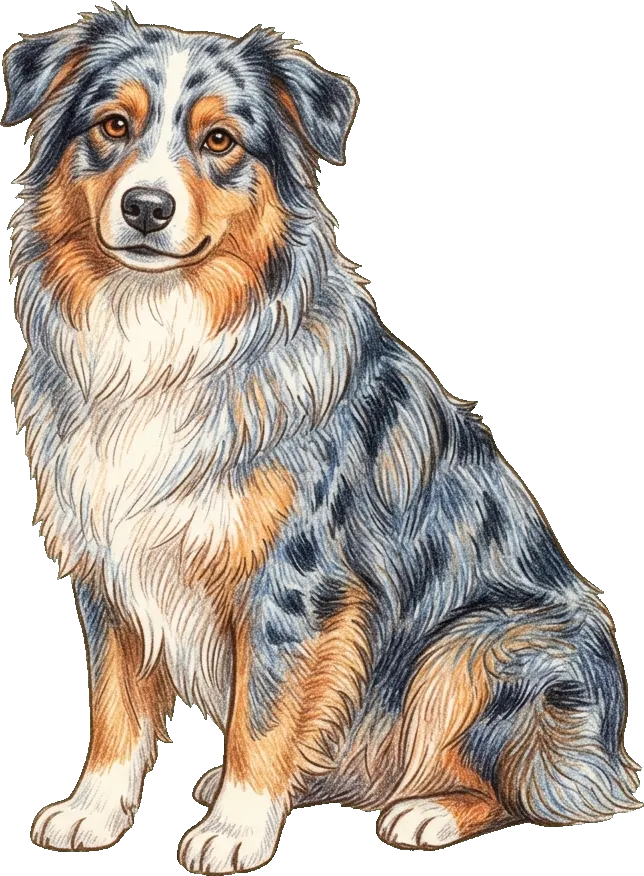
Australian Shepherd
The Australian Shepherd is a brilliant, intensely active herding dog that thrives when given a real job to do. Living well with an Aussie means providing substantial daily physical exercise and mental enrichment to prevent boredom-driven destructive behavior. This guide sticks to daily life: house-training, walks, the temperament to expect, and the everyday care required.
Daily-care planners
House-training
Moderate to house-trainAussies are fast learners, but boredom causes more accidents than anything else. Mental enrichment between potty trips helps keep them settled and on-schedule.
Walks
Very high exercise needsAussies need substantial exercise and bore quickly on repetitive routes. Varied environments, off-leash runs in secure spaces, and training games woven into walks are the formula for a satisfied dog. They may try to herd other animals, people, or cyclists — awareness and training help channel that instinct. Under-exercised Aussies often redirect energy into destructive behavior.
Plan walksTemperament
Aussies are highly biddable and intensely active herders, meaning routine and mental work tend to matter just as much as walk length. They are eager to please their owners but are often reserved around strangers.
Because of their very high exercise requirements and need for mental stimulation, they thrive in homes with secure yards where they can run freely. While they can adapt to apartment living if their intense physical and mental needs are met, it requires a significant daily time commitment to prevent boredom and destructive behaviors.
They can be a moderate fit for families with children, provided there is supervision and ongoing training to manage their instinct to herd running kids. Due to their high energy and risk of separation anxiety, they are generally not recommended for first-time owners or inactive seniors without a solid plan for training and activity.
With other pets, an Aussie's strong herding instinct and high prey drive mean interactions need careful management. They tend to be selective with other dogs and may be prone to chasing cats or smaller animals.
Despite their name, the breed was actually developed in the western United States as a ranch and stock-herding dog, not in Australia. Their heavy, double coat helps them handle moderate temperatures well, but their history as working farm dogs means they are always looking for a task to focus their boundless energy.
What life with a Australian Shepherd asks of you
Grooming & coat
- Grooming effort
- Moderate grooming
- Shedding
- Heavy shedding
- Coat
- Medium coat
Exercise & enrichment
- Daily exercise
- Very high exercise needs
- Mental stimulation
- High mental stimulation
- Trainability
- Eager to please
Temperament & sociability
- With people
- Reserved with strangers
- With dogs
- Selective with other dogs
- With kids
- Good with considerate children (supervise)
- Barking / noise
- Moderately vocal
- Chase instinct
- High prey drive
- Time alone
- High separation-anxiety risk
Home & climate fit
- Hot weather
- Moderate heat tolerance
- Cold weather
- High cold tolerance
- House-training
- Moderate to house-train