Australian Cattle Dog
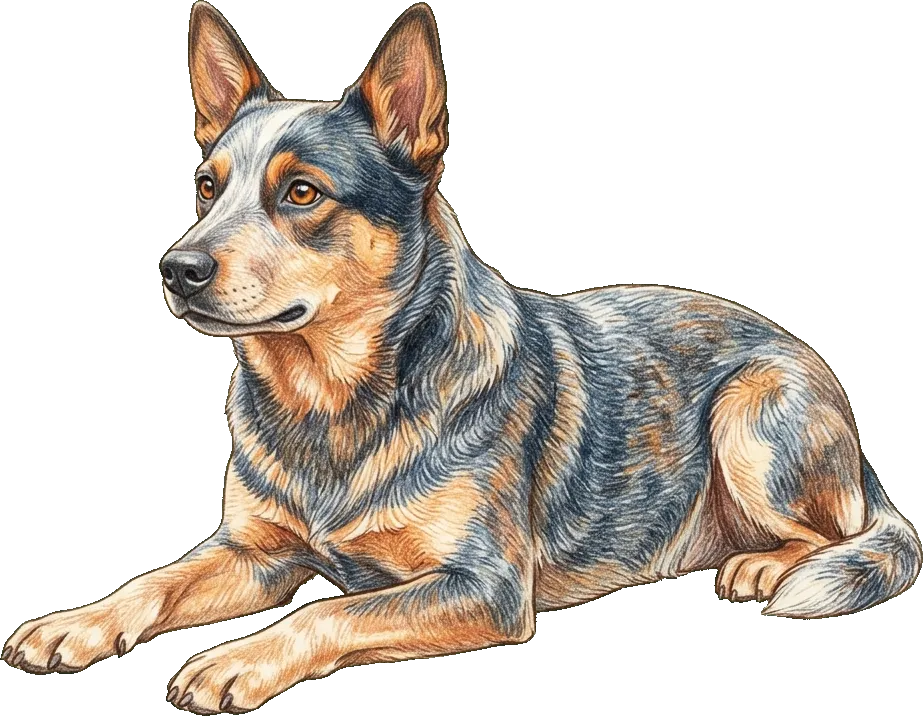
The Australian Cattle Dog is a relentless, intelligent worker that thrives on having a demanding daily job. Living well with a Heeler means matching their extraordinary energy with rigorous exercise and constant mental challenges. This guide covers the routines, training needs, and environment required to keep this intense herding breed fulfilled.
Daily-care planners
House-training
Easy to house-trainCattle Dogs love routine and pick up consistent schedules quickly. The main risk is not providing enough outdoor access to match their high-energy, high-turnover metabolism.
Walks
Very high exercise needsRelentless endurance and high drive make Cattle Dogs excellent running and hiking companions. Walks alone rarely satisfy them — they need substantial daily exercise and mental challenge. A Heeler without enough outlet tends to invent its own job, which is rarely welcome indoors. Varied routes and training integration on walks are the most effective formula.
Plan walksTemperament
Heelers are relentless herders that truly thrive when provided with a clear job and a steady, engaging routine. They are remarkably intelligent and driven, preferring active engagement over quiet downtime.
Because of their extraordinary need for physical exertion and mental stimulation, they do best in homes with ample outdoor space rather than apartments. A simple daily walk is rarely enough; they require vigorous activities like running, advanced training, or dog sports to prevent them from inventing their own destructive jobs indoors.
This breed is generally not recommended for first-time owners or households with young children, as their instinct to herd by nipping at heels can easily be triggered by running kids. They are best suited for experienced, active adults or families with older, considerate children who can participate in their training under careful supervision.
Their high prey drive and selective nature with other dogs mean they require careful, gradual introductions to new animals. They may not be compatible with cats or small pets, and interactions with unfamiliar dogs should always be actively managed.
Developed in the vast, rugged expanses of 19th-century Australia to drive cattle over long distances, their heritage includes crosses with the native Dingo, giving them immense stamina and heat tolerance. In broad English-speaking markets, they make exceptional companions for those with access to open country or large yards, excelling in rural environments where their hardy, working stock dog legacy can be fully appreciated.
What life with a Australian Cattle Dog asks of you
Grooming & coat
- Grooming effort
- Low grooming
- Shedding
- Seasonal shedding
- Coat
- Short coat
Exercise & enrichment
- Daily exercise
- Very high exercise needs
- Mental stimulation
- High mental stimulation
- Trainability
- Balanced
Temperament & sociability
- With people
- Reserved with strangers
- With dogs
- Selective with other dogs
- With kids
- Better suited to older children (supervise)
- Barking / noise
- Moderately vocal
- Chase instinct
- High prey drive
- Time alone
- Moderate separation-anxiety risk
Home & climate fit
- Hot weather
- High heat tolerance
- Cold weather
- High cold tolerance
- House-training
- Easy to house-train