Alaskan Malamute
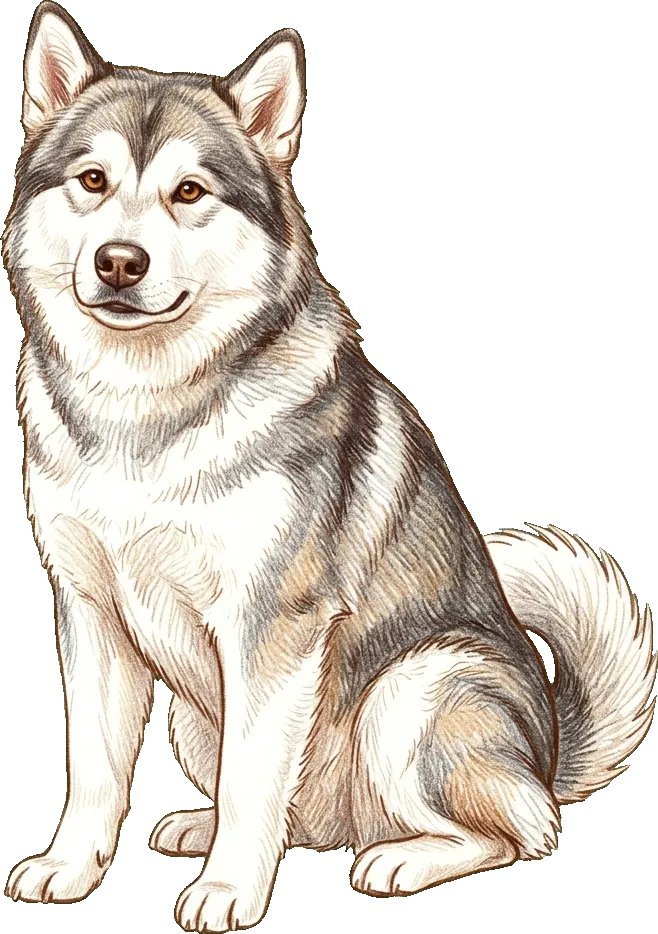
The Alaskan Malamute is a massive, enthusiastic working dog that brings immense pulling power and an independent streak to daily life. Living well with one is mostly about managing their heavy exercise needs, strict leash training, and keeping their thick double coat cool. This guide sticks to daily life: house-training, walks, the temperament to expect, and the health checks worth knowing.
Daily-care planners
House-training
Moderate to house-trainThey are clean dogs and usually catch on to the concept quickly, but their stubborn nature means they might ignore commands if they don't see the point.
Walks
High exercise needsIncredibly strong pullers. If not trained early, walking an adult Malamute is exhausting. They need heavy, vigorous exercise and thrive pulling a sled, cart, or running in very cold weather.
Plan walksTemperament
The Alaskan Malamute is an enthusiastic, massively powerful freighting dog that combines an affectionate nature with a notoriously independent streak.
These large dogs need substantial physical exercise and thrive on heavy, vigorous activities like pulling a cart or sled, alongside moderate mental stimulation to stay engaged. Because they have a thick double coat and low heat tolerance, it is crucial to keep them cool during warmer months and exercise them during the cooler parts of the day.
While generally warm and enthusiastic with their families, their massive size and independent nature mean interactions with young children should always be supervised. They are clean dogs that usually grasp house-training quickly, though their stubbornness can make general obedience training an ongoing project that requires patience.
Their high prey drive means careful introductions and caution are necessary around cats or smaller pets. They can also be selective with other dogs, so early socialization is important to help them navigate canine encounters smoothly.
Originally bred to haul heavy freight across harsh Arctic landscapes, their immense pulling power and heavy coats are hardwired traits. In North America, they thrive best in homes with ample space and securely fenced yards, especially in cooler climates that allow them to work and play comfortably outdoors year-round.
What life with a Alaskan Malamute asks of you
Grooming & coat
- Grooming effort
- High grooming
- Shedding
- Heavy shedding
- Coat
- Medium coat
Exercise & enrichment
- Daily exercise
- High exercise needs
- Mental stimulation
- Moderate mental stimulation
- Trainability
- Independent thinker
Temperament & sociability
- With people
- Enthusiastically friendly
- With dogs
- Selective with other dogs
- With kids
- Good with considerate children (supervise)
- Barking / noise
- Moderately vocal
- Chase instinct
- High prey drive
- Time alone
- Moderate separation-anxiety risk
Home & climate fit
- Hot weather
- Low heat tolerance
- Cold weather
- High cold tolerance
- House-training
- Moderate to house-train