Afghan Hound
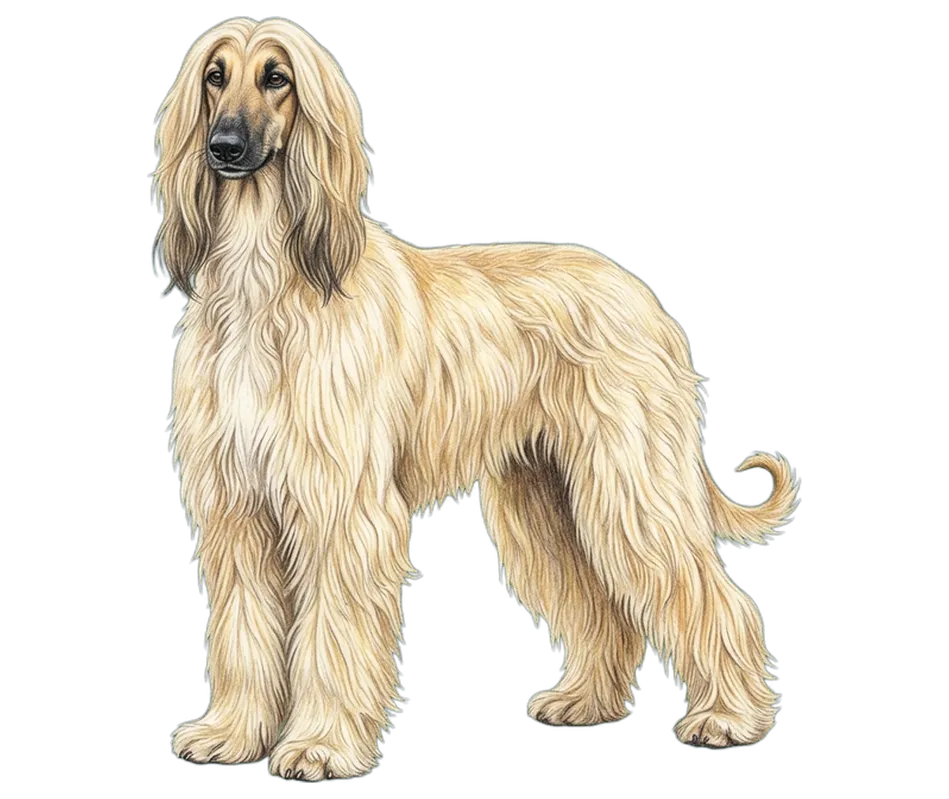
The Afghan Hound is an ancient sighthound shaped by the cold mountains and rough terrain of Afghanistan, where it hunted swift game largely on its own judgment — a heritage that produced a dignified, independent thinker rather than an eager-to-please retriever type. Living well with one means embracing a dog that is aloof with strangers but deeply devoted to its own people, needs a securely fenced space and leashed walks to safely enjoy its remarkable speed, and comes with a flowing coat that rewards a real, ongoing grooming routine rather than occasional attention. Patient, respectful, reward-based guidance and an owner who enjoys grooming as a bonding ritual bring out the calm, elegant companion this breed can be.
Daily-care planners
House-training
Challenging to house-trainHouse-training an Afghan Hound calls for extra patience, since their independent, self-directed nature means they are less reflexively tuned in to pleasing a handler than some breeds. A calm, predictable schedule — frequent trips outside after meals, naps, and play, with warm praise for every success — works far better than pressure or correction, which tends to make an independent thinker shut down rather than cooperate. Consistency from everyone in the household speeds things along.
Walks
High exercise needsThe Afghan Hound's walking needs center on managing speed and prey drive safely rather than covering enormous distance. This is a true sprinter, capable of remarkable bursts of speed, so leashed walks and a securely fenced yard are essential — off-leash time belongs only in enclosed, dog-safe areas, since recall cannot be counted on once prey drive kicks in. A comfortable, well-fitted harness protects their fine build during walks, and because their heavy coat runs warm, exercise is best scheduled in the cooler parts of the day with water on hand. A little coat check after outdoor time — for burrs, tangles, or debris — keeps grooming manageable and the dog comfortable.
Plan walksTemperament
The Afghan Hound's history stretches back centuries in the mountainous terrain of Afghanistan, where it was expected to spot and run down fast game over rocky, uneven ground, often out of sight of a handler. That heritage of independent judgment is still visible today: this is a dog that thinks for itself, observes before it acts, and carries itself with a natural, almost regal dignity rather than bouncy eagerness.
At home, Afghan Hounds tend to be reserved with strangers and quietly devoted to their own people, often bonding closely with the family while remaining somewhat aloof in new situations. Early, positive socialization helps them meet new people, places, and dogs with more ease. They are intelligent and capable learners, but because their history rewarded independent thinking over constant handler-checking, training goes best with patient, reward-based methods and realistic expectations — a well-raised Afghan Hound can be beautifully mannered, just rarely in a hurry to prove it.
As a sighthound, prey drive and pure speed are part of the package, so recall around loose animals or an unfenced space cannot be relied on the way it might be for a more handler-focused breed; secure fencing and leashed walks in open areas keep both the dog and local wildlife safe. Around other dogs they can be selective, so thoughtful introductions matter, and their moderate patience with children means play with younger kids is best supervised.
The breed's signature long, silky coat is central to daily life with an Afghan Hound: it is elegant to look at but genuinely high-maintenance, needing frequent, thorough brushing to prevent painful mats and to keep the skin underneath healthy. Their build and coat also mean they run warm in heat but handle cold well, so hot-weather exercise calls for extra care and shade.
What life with a Afghan Hound asks of you
Grooming & coat
- Grooming effort
- High grooming
- Shedding
- Seasonal shedding
- Coat
- Long coat
Exercise & enrichment
- Daily exercise
- High exercise needs
- Mental stimulation
- Moderate mental stimulation
- Trainability
- Independent thinker
Temperament & sociability
- With people
- Reserved with strangers
- With dogs
- Selective with other dogs
- With kids
- Good with considerate children (supervise)
- Barking / noise
- Quiet
- Chase instinct
- High prey drive
- Time alone
- Moderate separation-anxiety risk
Home & climate fit
- Hot weather
- Low heat tolerance
- Cold weather
- High cold tolerance
- House-training
- Challenging to house-train