Night-time potty training: how often to wake a puppy, and when it stops
Last reviewed: 2026-08-20 · General information only.
How long a puppy can hold its bladder overnight is one of the first things new owners want to know, and the answer changes fast as they grow. Most young puppies cannot make it through a full night at first and need at least one overnight potty break—some veterinary sources note this may be necessary until around 5 months old. A healthy, fully house-trained adult dog can typically go considerably longer. This guide covers how long puppies (and adult dogs) can usually hold it overnight, how many times you may need to wake a young puppy, when night-time trips typically stop, and a simple evening routine that helps. This is general orientation only—every puppy is different, and your vet knows yours best.
How long can a puppy hold its bladder at night?
Expect a young puppy to need at least one overnight potty break at first, with stretches gradually lengthening as they grow and bladder control develops.
The American Kennel Club's rule of thumb: "Take the age of your puppy in months and add one, and that is the maximum number of hours that your puppy should be able to comfortably hold it between potty breaks." [src]
Vets similarly note that "puppies may need overnight outings until they are 5 months of age," aligning with both the guideline above and the general timeline in the table below. [src]
Puppies often manage slightly longer stretches asleep than awake, so the overnight gap usually closes before the daytime one. Build up gradually rather than forcing it. See the FAQ below for adult dogs.
How many times should I wake my puppy at night?
The number of overnight wake-ups a puppy needs mostly comes down to age—commonly one or two trips at around 8 weeks, down to one by 3 months, and often zero by 5–6 months. See the table below for the general pattern.
Rather than waking a puppy on a strict multi-alarm schedule, most owners do best setting a single overnight check timed to their puppy's current stage, then listening for whining in between. Our Puppy Potty Schedule Generator can help sketch a realistic day-and-night routine that adjusts as your puppy's needs change.
If your puppy is sleeping soundly and not asking to go out, there is usually no need to wake them just to be safe. Let a settled puppy sleep, and adjust the check only if accidents happen.
What overnight routine helps?
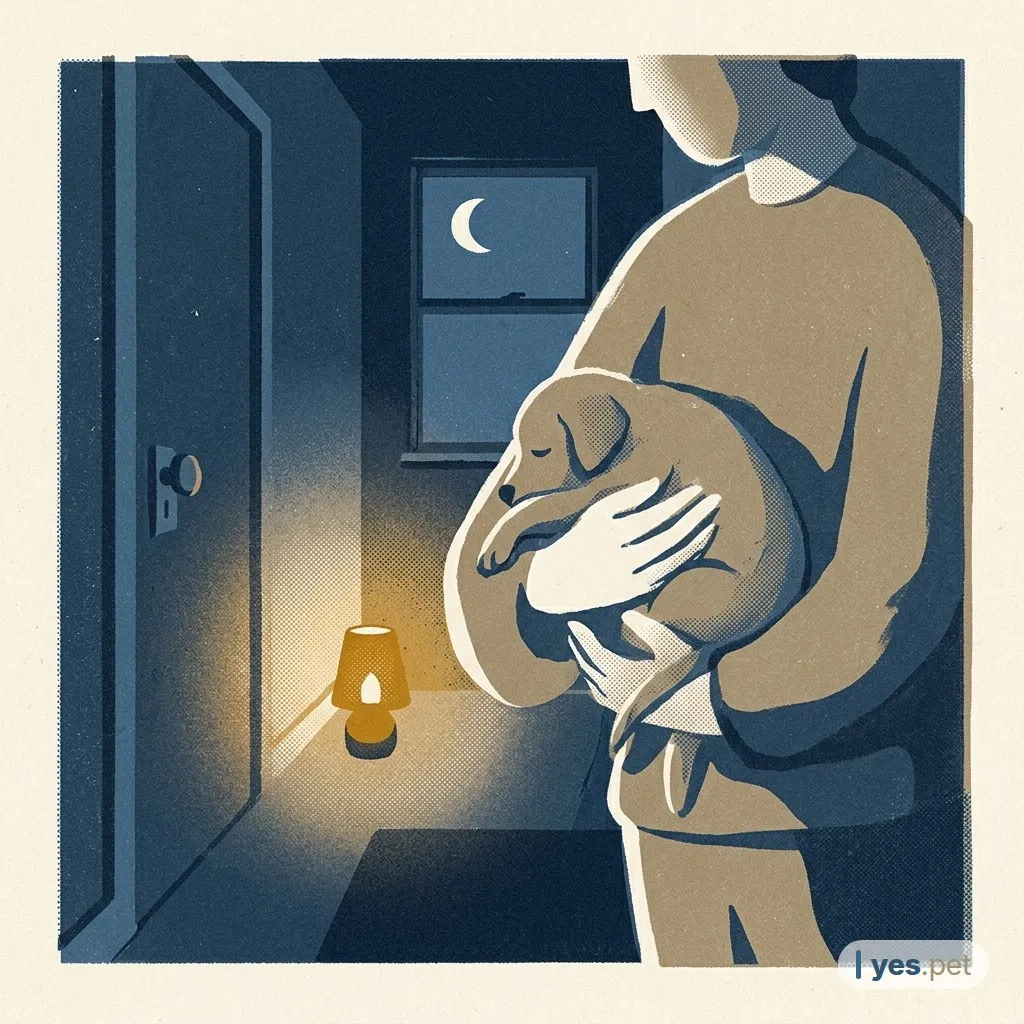
Keep the last evening hours calm, offer a final potty trip right before bed, and make any night-time break boring — out, potty, straight back to bed, with no play.
The AKC suggests positioning the crate so you notice when a puppy needs out: "Keeping the crate in or near your bedroom lets you hear a whimper or a whine if your puppy needs to go out during the night or before your alarm sounds." [src]
Consistency matters more than speed — the same bedtime and wake-up rhythm helps a puppy settle into longer nights.
Should I manage food and water before bed?
Timing the last meal and drink so there is less to process overnight is a common, gentle way to help — without ever restricting water that a puppy genuinely needs.
As a rough guideline, many owners start winding down big meals and drinks one to two hours before bedtime. A puppy that has just been playing or panting will naturally want more water, so it helps to build in extra buffer time.
The AKC notes that "choosing a puppy food that digests well and avoiding feeding within 2 hours of bedtime will help." [src]
Offer a final potty trip right before lights-out, and always keep water available if your puppy is thirsty, easing off this routine on hot days or whenever your vet advises free access. This is general orientation, not a medical instruction; never withhold water from a puppy that needs it.
When should night-time potty trips stop?
Let the puppy show you it is ready rather than dropping the night trip on a fixed date. The cue is a run of dry, settled nights where the puppy is comfortably making it through.
As a general pattern, many puppies drop the overnight trip between 4 and 6 months. This is a rough range, not a deadline—let your puppy's dry nights be the real signal.
It helps that puppies "will usually be able to hold their bladder for a longer period when they're asleep and not active," so the overnight stretch often closes before the daytime one. [src]
Once your puppy is reliably waking dry and not asking to go out, you can stop setting an alarm and let it wake you only if it genuinely needs out. Stretch the night gradually rather than all at once, and keep the calm bedtime routine even after the night trips stop.
When should I talk to a vet?
This is general information, not a health assessment. Ask your veterinarian if an older puppy still cannot last the night long after you expected progress, suddenly needs to go far more often overnight, or seems uncomfortable. The same applies if a previously dry puppy starts having accidents again—a quick vet check can rule out a medical or behavioral cause.
Your vet can tell whether slow night-time progress—or a step back after progress—is normal development or something worth checking, and their advice always overrides any general rule of thumb.
Rough overnight expectation by age (orientation only)
| Puppy age | Overnight breaks (typical start) | Bedtime tip |
|---|---|---|
| 8 weeks (~2 mo) | Often 1–2 | Last potty right before bed; keep it boring |
| 3 months | Often 1 | Calm evening; crate near your bedroom |
| 4 months | Sometimes 0–1 | Consistent wake/bed times |
| 5–6 months | Frequently 0 | Keep the routine even once dry |
Key takeaway
Plan on at least one overnight potty break for a young puppy—often until around 4–6 months. Keep night trips calm and boring, offer a final break right before bed, and let the stretch lengthen gradually as bladder control develops. An occasional accident after dry nights is not unusual, but ask your vet if it persists.
Turn this advice into a schedule →
Frequently asked questions
How long until a puppy can sleep through the night without a potty break?
Most young puppies need at least one overnight trip at first and gradually stretch the night as bladder control develops over the following weeks. Build up gradually and adjust to your puppy rather than forcing a dry night.
How long can dogs hold their pee overnight?
It depends heavily on age. Young puppies typically cannot hold it for a full night and need at least one overnight break; some veterinary sources note this may be necessary until around 5 months old. A healthy, fully house-trained adult dog can often comfortably go 6–8 hours or more overnight while sleeping, though this varies by individual, size, and health. Senior dogs or those with health conditions may need more frequent breaks—ask your vet what is normal for your dog.
Should I wake my puppy for a night-time potty break?
Many owners take a young puppy out once overnight while it cannot yet hold the whole night, keeping the trip calm and boring. As control improves the trip usually fades. Adjust to your puppy and ask your vet if unsure.
Should I take away water at night to help with potty training?
A common gentle approach is to time the last big drink and meal before bedtime — the AKC suggests avoiding feeding within 2 hours of bedtime — then offer a final potty trip right before lights-out. Always keep water available if your puppy is thirsty, ease off on hot days, and never withhold water a puppy needs. Ask your vet if unsure.
When can I stop the night-time potty alarm?
A good cue is a run of dry, settled nights where your puppy comfortably makes it through and is not asking to go out. Because puppies usually hold longer asleep than awake, the overnight stretch often closes first. Stop the alarm gradually once nights are reliably dry, and keep the calm bedtime routine.
Why did my puppy start having accidents at night again after being dry?
Night regressions usually track a daytime cause — a schedule change, too much water late in the evening, or growing independence testing the routine. Go back to one planned overnight break for a few nights and tighten the evening wind-down. Our guide to daily puppy potty schedules covers regression, and its causes, in more depth. If accidents continue for more than a week or come with straining or other symptoms, talk to your vet.
Is this a substitute for veterinary advice?
No. yes.pet provides general information only and is not a substitute for professional veterinary advice, diagnosis or treatment. Always consult your veterinarian.
Sources
- Puppy Potty Training Schedule: A Timeline for Housebreaking Your Puppy (opens in a new tab) — American Kennel Club (AKC)
- House Training Your Puppy (opens in a new tab) — VCA Animal Hospitals