Basset Hound
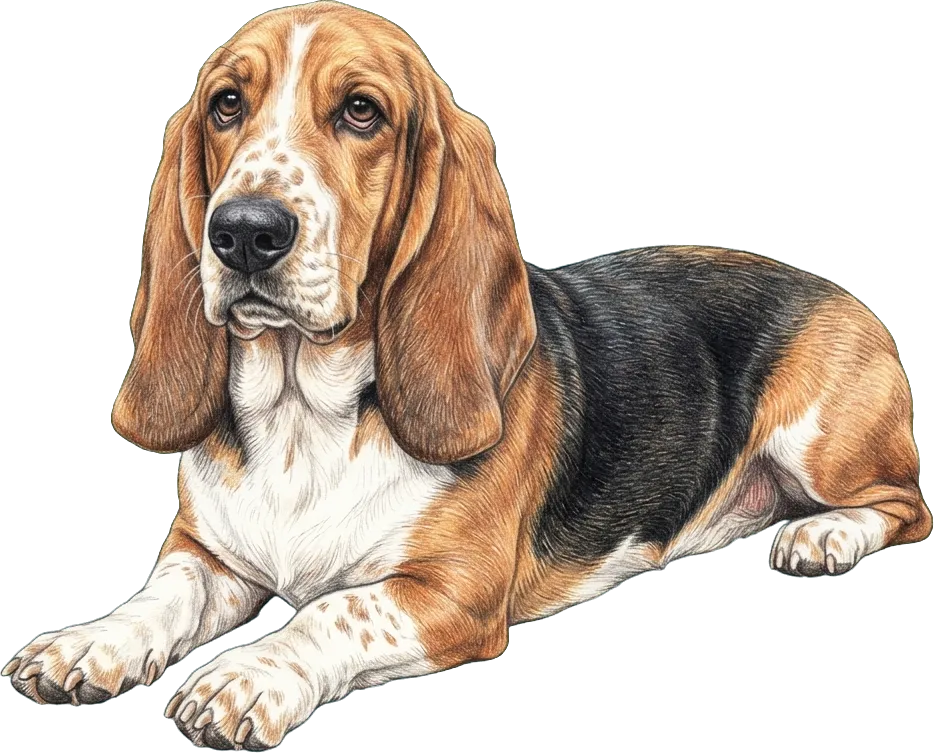
Le Basset Hound est un chien de rouge calme et sociable, près de terre et guidé par un flair remarquable. Bien vivre à ses côtés implique d'accompagner sa nature indépendante axée sur les odeurs plutôt que de s'y opposer — un apprentissage de la propreté régulier, une gestion rigoureuse du poids pour protéger son dos allongé et des soins auriculaires fréquents constituent le quotidien derrière le charme facile de cette race.
Planificateurs du quotidien
Propreté
Difficile à rendre propreL'apprentissage de la propreté chez le Basset demande de la patience. L'esprit indépendant de la race et son flair puissant font qu'un chiot se laisse facilement distraire à l'extérieur et peut considérer cet apprentissage comme facultatif. Des horaires réguliers, des félicitations chaleureuses et des récompenses systématiques après chaque réussite dehors s'avèrent bien plus efficaces que les réprimandes. Les journées froides ou pluvieuses peuvent ralentir la progression, il convient donc de prévoir du temps supplémentaire et de garder une routine sereine et bienveillante.
Promenades
Besoin d’exercice modéréUn Basset se promène pour explorer les odeurs du monde ; les sorties relèvent donc autant de l'enrichissement que de la distance parcourue. Laissez votre chien adopter un rythme détendu de flairage, muni d'un harnais et d'une laisse sécurisés — un flair déterminé peut occulter totalement le rappel. Gardez des sessions modérées pour préserver son dos allongé et sa structure lourde, et surveillez attentivement son poids, car les kilos superflus sollicitent fortement la colonne et les articulations. Le Basset tolère bien le temps modéré mais fatigue vite face à la chaleur et à l'humidité ; privilégiez donc les heures les plus fraîches de la journée en été. Les promenades quotidiennes restent indispensables : elles permettent à ce chien gourmand de garder sa condition corporelle élancée tout en offrant à son flair exceptionnel la stimulation dont il a besoin.
Planifier les promenadesTempérament
Élevé en France et en Grande-Bretagne pour suivre le lapin et le lièvre à la trace à pied, le Basset Hound possède l'un des flairs les plus puissants du monde canin, couplé à une méthode patiente et appliquée. À la maison, il devient un compagnon calme et affectueux qui noue des liens étroits avec sa famille et accueille généralement les visiteurs, les enfants et les autres chiens avec une nature aisée et sociable.
Ce même héritage de chasse fait du Basset un penseur indépendant. Il ne refuse pas d'apprendre — il évalue simplement si une demande est plus intéressante que la piste qu'il vient de trouver. Des sessions courtes, stimulantes et récompensées par de la nourriture captent bien mieux son attention que la répétition ou les réprimandes. Un jardin bien clôturé est essentiel, car un Basset sur une piste peut devenir parfaitement sourd au rappel.
Les Bassets sont réputés pour leur voix et utilisent un aboiement grave pour saluer les visiteurs ou exprimer l'ennui ; c'est un mode de communication normal pour un chien de chasse, qui s'atténue lorsque le chien bénéficie d'assez de compagnie et d'activité. Animaux de meute dans l'âme, ils apprécient peu les longues périodes de solitude et s'épanouissent davantage lorsqu'une présence est assurée une grande partie de la journée. Leur constitution lourde et leur dos allongé demandent une attention particulière — maintenir le chien dans une condition corporelle élancée, lui éviter de sauter des meubles et mettre des rampes à sa disposition permet de protéger sa colonne vertébrale tout au long de sa vie.
Ce que la vie avec un Basset Hound exige de vous
Toilettage & pelage
- Effort de toilettage
- Entretien modéré
- Perte de poils
- Mue saisonnière
- Pelage
- Poil court
Exercice & stimulation
- Exercice quotidien
- Besoin d’exercice modéré
- Stimulation mentale
- Stimulation mentale modérée
- Facilité d'éducation
- Esprit indépendant
Tempérament & sociabilité
- Avec les gens
- Chaleureusement sociable
- Avec les chiens
- Sociable avec les autres chiens
- Avec les enfants
- Doux avec les enfants (toujours superviser)
- Aboiements / bruit
- Expressif
- Instinct de poursuite
- Instinct de prédation modéré
- Solitude
- Risque modéré d’anxiété de séparation
Foyer & climat
- Chaleur
- Tolérance modérée à la chaleur
- Froid
- Tolérance modérée au froid
- Propreté
- Difficile à rendre propre