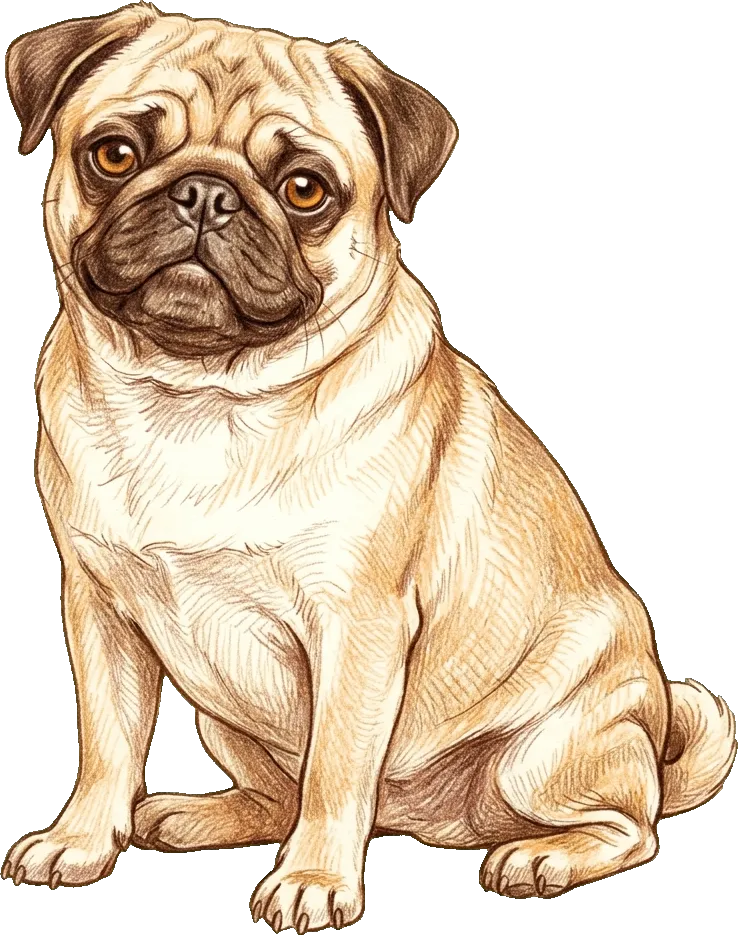
Pug
El Pug es un compañero inmensamente afectuoso y con una terquedad encantadora, cuyo objetivo principal es estar siempre a tu lado. Convivir plenamente con uno consiste en disfrutar de su carácter extrovertido mientras gestionas con sumo cuidado su extrema sensibilidad al calor y su necesidad de rutinas amables y bien estructuradas.
Planificadores de cuidado diario
Adiestramiento para ir al baño
Difícil de enseñar a ir al bañoLos Pug son cariñosos pero célebres por su terquedad, y detestan profundamente el clima frío o húmedo, una combinación que puede retrasar el proceso de enseñar a hacer sus necesidades. Mantener un horario constante, elegir un área protegida para que vayan al baño y ofrecerles recompensas inmediatas funcionará mucho mejor que cualquier tipo de corrección.
Paseos
Necesidad moderada de ejercicioAl ser una raza de hocico chato, se sofocan con mucha facilidad: mantén los paseos cortos, por zonas sombreadas y en los momentos más frescos del día, y toma los jadeos fuertes como una señal innegable de que debes parar. Un arnés es mucho más amable para sus vías respiratorias que un collar. En un clima templado, los Pug disfrutan de una caminata relajada, pero no están hechos para recorrer largas distancias ni para soportar el calor.
Planificar paseosTemperamento
Los Pug son perros inmensamente sociables y compañeros encantadores que crean un vínculo muy profundo contigo y prosperan cuando reciben tu afecto.
Su tamaño pequeño los hace sumamente adaptables a la vida en apartamentos, siempre y cuando cubras sus necesidades con un par de paseos diarios que sean cortos y tranquilos. Dado que se acaloran con extrema facilidad, es vital evitar las actividades extenuantes y mantener su entorno agradablemente fresco, priorizando una compañía relajada en interiores por encima de los entrenamientos físicos o mentales intensos.
Son compañeros de casa entusiastas que por lo general se llevan muy bien con los niños que los tratan con respeto, lo que los convierte en una excelente opción tanto para dueños primerizos como para familias. Aunque pueden mostrar cierta terquedad durante el adiestramiento, sobre todo al enseñar a hacer sus necesidades, la paciencia y las recompensas positivas serán tus mejores aliados. Presentan un riesgo moderado de padecer ansiedad por separación, por lo que vivirán más felices en hogares donde haya alguien presente durante gran parte del día.
Con un instinto de presa muy bajo y una disposición natural para socializar con otros perros, el Pug suele convivir pacíficamente con gatos y otras mascotas si los presentas de la forma adecuada.
Criado originalmente para ser el compañero de los emperadores chinos, el Pug tiene una larga historia como un devoto perro faldero. Hoy en día, su gran adaptabilidad lo hace popular en entornos muy diversos, pero debes mantenerte alerta durante los veranos calurosos y húmedos, eligiendo siempre espacios con aire acondicionado y paseos a primera hora de la mañana para garantizar su seguridad y bienestar.
Lo que la vida con un Pug requiere de ti
Cuidado y pelaje
- Mantenimiento del pelaje
- Mantenimiento moderado
- Caída de pelo
- Pérdida de pelo abundante
- Pelaje
- Pelo corto
Ejercicio y enriquecimiento
- Ejercicio diario
- Necesidad moderada de ejercicio
- Estimulación mental
- Baja estimulación mental
- Facilidad de adiestramiento
- Equilibrado
Temperamento y sociabilidad
- Con las personas
- Entusiasta y amigable
- Con otros perros
- Sociable con otros perros
- Con los niños
- Gentil con los niños (siempre supervisar)
- Ladridos / ruidos
- Vocalización moderada
- Instinto de persecución
- Bajo instinto de presa
- Tiempo a solas
- Riesgo moderado de ansiedad por separación
Adaptación al hogar y al clima
- Clima cálido
- Baja tolerancia al calor
- Clima frío
- Baja tolerancia al frío
- Adiestramiento para ir al baño
- Difícil de enseñar a ir al baño