Portuguese Water Dog
Compartir tu hogar con un Portuguese Water Dog significa darle la bienvenida a un compañero sumamente afectuoso y muy activo que disfruta al máximo cuando lo incluyes en cada aspecto de la vida familiar. Estos atletas brillantes y obedientes necesitan un dueño dedicado que esté dispuesto a brindarles abundante ejercicio físico, retos mentales estimulantes y una rutina de aseo constante.
Planificadores de cuidado diario
Adiestramiento para ir al baño
Dificultad moderada para enseñar a ir al bañoEnseñar a hacer sus necesidades al Portuguese Water Dog es un proceso relativamente sencillo, gracias a su inteligencia, su disposición al adiestramiento y su fuerte deseo de complacerte. El éxito dependerá de que implementes una rutina constante, le ofrezcas salidas frecuentes supervisadas al exterior y lo premies con refuerzo positivo entusiasta cuando acierte. Al establecer expectativas claras y mantener horarios predecibles, podrás guiar sin problemas a tu cachorro durante su aprendizaje.
Paseos
Alta necesidad de ejercicioSatisfacer las altas necesidades de ejercicio de un Portuguese Water Dog implica mucho más que un paseo casual por la manzana; requieren actividades diarias vigorosas que supongan un reto tanto físico como mental. Estos atléticos perros de trabajo destacan en actividades intensas como el senderismo, el juego interactivo y, haciendo honor a su herencia, la natación estructurada o el trabajo en el agua, aunque siempre debes cuidar su temperatura en climas cálidos para mantener su bienestar. Incorporar juegos de adiestramiento, trabajo de olfato o ejercicios de agilidad en sus salidas diarias les brindará esa estimulación mental esencial que tanto anhelan, garantizando que esta raza tan vivaz se mantenga equilibrada y feliz en tu hogar.
Planificar paseosTemperamento
Criado históricamente en la escarpada costa de Portugal, el Portuguese Water Dog era un ayudante indispensable para los pescadores locales. Entre sus tareas se incluía arrear peces hacia las redes, bucear para recuperar equipos perdidos y hasta nadar para llevar mensajes entre los barcos y la orilla. Este legado de trabajo se refleja hoy en su complexión atlética —con machos que suelen pesar entre 19 y 27 kilogramos, y hembras entre 16 y 23 kilogramos— y en su pasión inagotable por la natación. Poseen una tolerancia moderada tanto al calor como al frío, lo que les permite disfrutar de aventuras al aire libre en diversos climas junto a ti.
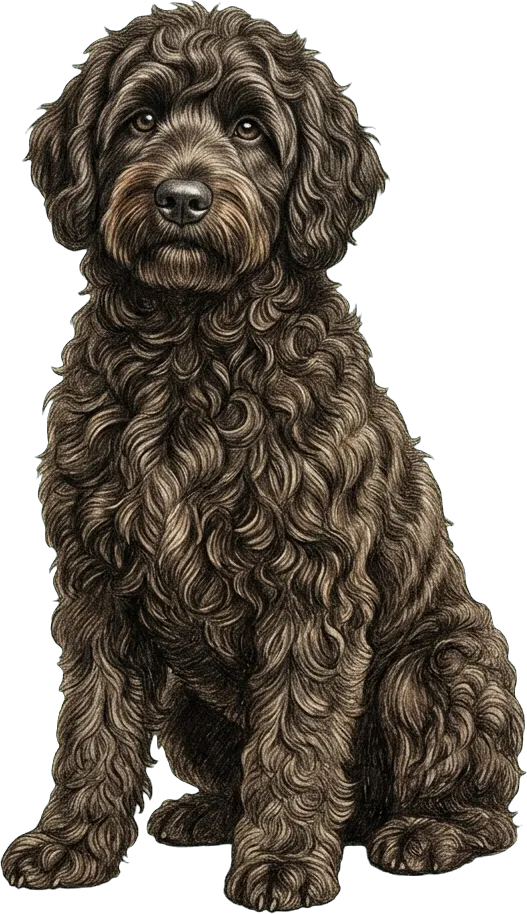
Un rasgo distintivo de la raza es su manto único y abundante, ya sea de rizos apretados o de ondas suaves, que suelta muy poco pelo pero exige un mantenimiento riguroso. Como dueño responsable, debes comprometerte con una rutina de aseo exigente que incluya cepillados frecuentes y minuciosos, además de cortes profesionales regulares para asegurar que su pelaje se mantenga sin nudos y cómodo para tu perro. A nivel mental, son excepcionalmente brillantes y dóciles para el adiestramiento, y prosperan cuando tienen un trabajo que hacer o actividades que canalicen su inagotable energía. Su naturaleza alerta los hace estar atentos a su entorno, con una vocalización moderada para anunciar visitas, y su instinto de presa moderado facilita que puedan socializar positivamente con otros perros.
Debido a que forman un vínculo tan estrecho con sus familias, pueden experimentar ansiedad por separación moderada si se les deja solos por periodos prolongados; son auténticos compañeros «velcro» que aprecian enormemente tu compañía. Al integrarlos por completo en las actividades familiares y satisfacer sus altas necesidades de ejercicio físico y enriquecimiento mental, te verás recompensado con un compañero alegre y cariñoso durante sus típicos 11 a 13 años de vida.
Lo que la vida con un Portuguese Water Dog requiere de ti
Cuidado y pelaje
- Mantenimiento del pelaje
- Mantenimiento alto
- Caída de pelo
- Pérdida de pelo mínima
- Pelaje
- Pelo largo
Ejercicio y enriquecimiento
- Ejercicio diario
- Alta necesidad de ejercicio
- Estimulación mental
- Alta estimulación mental
- Facilidad de adiestramiento
- Deseoso de complacer
Temperamento y sociabilidad
- Con las personas
- Entusiasta y amigable
- Con otros perros
- Sociable con otros perros
- Con los niños
- Gentil con los niños (siempre supervisar)
- Ladridos / ruidos
- Vocalización moderada
- Instinto de persecución
- Instinto de presa moderado
- Tiempo a solas
- Riesgo moderado de ansiedad por separación
Adaptación al hogar y al clima
- Clima cálido
- Tolerancia moderada al calor
- Clima frío
- Tolerancia moderada al frío
- Adiestramiento para ir al baño
- Dificultad moderada para enseñar a ir al baño