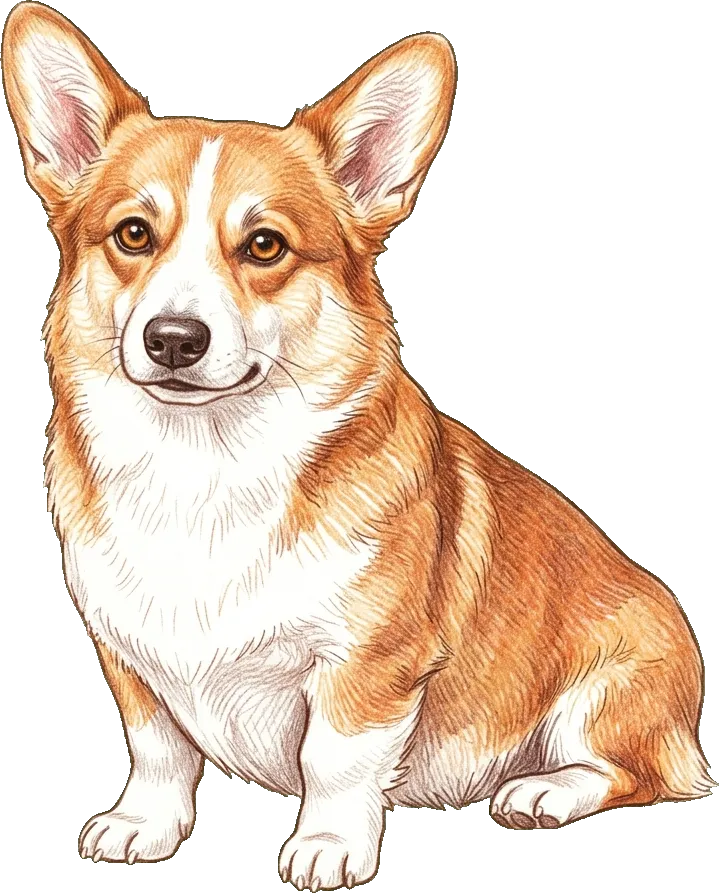
Pembroke Welsh Corgi
El corgi galés de Pembroke es un perro pastor sorprendentemente enérgico en un formato pequeño, famoso por su larga asociación con la familia real británica. Convivir en armonía con uno implica satisfacer su alta necesidad de ejercicio y estimulación mental, al mismo tiempo que gestionas su tendencia a vocalizar. Esta guía cubre la vida diaria: enseñar a hacer sus necesidades, los paseos, el temperamento que puedes esperar y los aspectos prácticos para cuidar su manto doble, de abundante muda.
Planificadores de cuidado diario
Adiestramiento para ir al baño
Dificultad moderada para enseñar a ir al bañoLos corgis son inteligentes pero independientes: comprenden la rutina rápidamente, pero pueden ponerla a prueba. Una constancia firme y perseverante es más efectiva que limitarse solo a los elogios.
Paseos
Alta necesidad de ejercicioCompactos pero sorprendentemente enérgicos, los corgis disfrutan de un paso ligero y pueden cubrir buenas distancias para su tamaño. Vigila el sobrecalentamiento en días calurosos dada su baja estatura y su grueso manto doble. Integrar juegos de instinto de pastoreo o desafíos de agilidad en los paseos los mantiene mentalmente estimulados. Por lo general, toleran bien el clima más fresco.
Planificar paseosTemperamento
Los corgis son perros pastores en un formato pequeño, que demuestran ser sorprendentemente enérgicos e inteligentes. Aprenden rápidamente con una rutina, pero tienen una faceta independiente.
A pesar de su tamaño compacto, su gran energía y su necesidad de estimulación mental exigen actividades diarias específicas. Un jardín vallado es ideal, pero se adaptan a los apartamentos si te comprometes a darles paseos largos y vigorosos y sesiones de adiestramiento estimulantes.
Son compañeros gratificantes para hogares activos, aunque sus interacciones con los niños requieren supervisión, ya que sus instintos de pastoreo pueden llevarlos a dar pequeños mordiscos en los talones. Su naturaleza educada es adecuada para dueños primerizos dedicados y personas mayores que puedan gestionar su tendencia a ladrar y su abundante muda de pelo.
Los corgis galeses de Pembroke suelen ser tolerantes con otros perros si se socializan adecuadamente desde una edad temprana. Su moderado instinto de presa les permite vivir pacíficamente con gatos de interior, siempre que establezcas límites claros para evitar que pastoreen a sus compañeros felinos.
Criados como perros pastores de ganado en Gales, su baja estatura los mantenía a salvo de las patadas de las vacas. Su grueso manto doble soporta el clima fresco maravillosamente, pero ofrece una tolerancia moderada al calor, por lo que el ejercicio en verano debe trasladarse a las mañanas o tardes más frescas.
Lo que la vida con un Pembroke Welsh Corgi requiere de ti
Cuidado y pelaje
- Mantenimiento del pelaje
- Mantenimiento moderado
- Caída de pelo
- Pérdida de pelo abundante
- Pelaje
- Pelo medio
Ejercicio y enriquecimiento
- Ejercicio diario
- Alta necesidad de ejercicio
- Estimulación mental
- Alta estimulación mental
- Facilidad de adiestramiento
- Equilibrado
Temperamento y sociabilidad
- Con las personas
- Amigable y cortés
- Con otros perros
- Tolerante con otros perros
- Con los niños
- Bien con niños respetuosos (supervisar)
- Ladridos / ruidos
- Muy vocal
- Instinto de persecución
- Instinto de presa moderado
- Tiempo a solas
- Riesgo moderado de ansiedad por separación
Adaptación al hogar y al clima
- Clima cálido
- Tolerancia moderada al calor
- Clima frío
- Alta tolerancia al frío
- Adiestramiento para ir al baño
- Dificultad moderada para enseñar a ir al baño