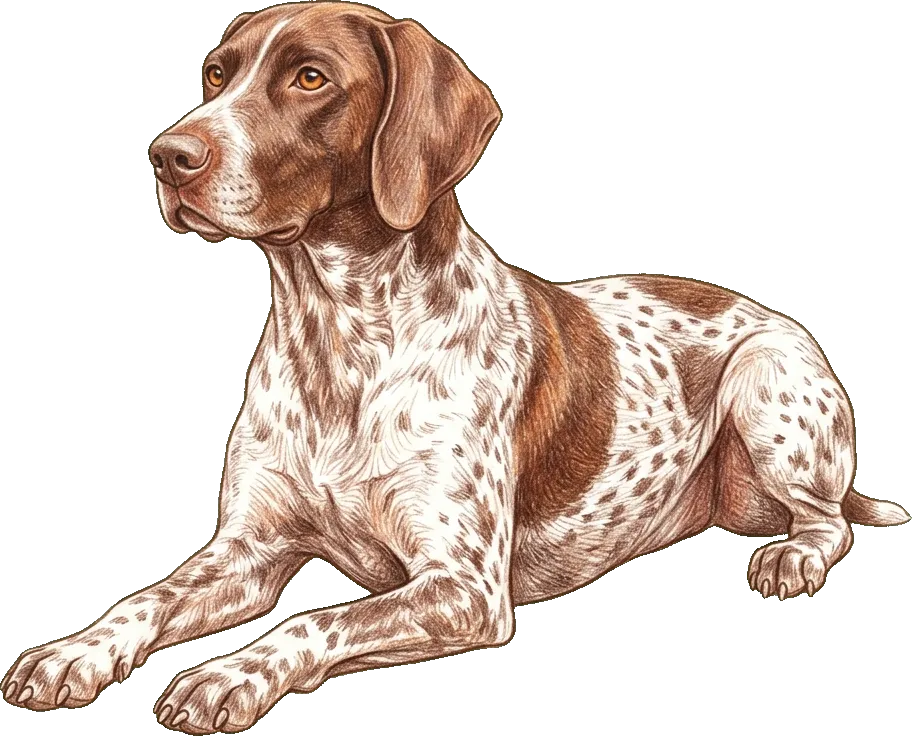
German Shorthaired Pointer
El German Shorthaired Pointer es un atleta incansable y entusiasta que necesita tener un trabajo serio que realizar. Vivir en plenitud con esta raza se trata principalmente de satisfacer su intensa necesidad de correr y de recibir estimulación mental a diario. Esta guía se enfoca en el día a día: enseñar a hacer sus necesidades, gestionar su energía, el temperamento que puedes esperar y los cuidados de salud que debes conocer.
Planificadores de cuidado diario
Adiestramiento para ir al baño
Dificultad moderada para enseñar a ir al bañoLa alta energía de esta raza significa que una vejiga llena suele ser lo último en lo que piensan. Realizar salidas frecuentes y cortas al aire libre —cada 1 o 2 horas para los cachorros jóvenes— ayuda a mantener bajo control los accidentes al enseñar a hacer sus necesidades.
Paseos
Necesidad de ejercicio muy altaComo atletas incansables creados para el trabajo de campo, necesitan una cantidad sustancial de ejercicio diario y disfrutan enormemente de correr junto a una bicicleta o en largas caminatas. La estimulación mental (como juegos de rastreo o adiestramiento durante los paseos) es tan importante como la distancia que recorren. Sin el desahogo adecuado, su energía puede volverse complicada de manejar; en cambio, un German Shorthaired Pointer bien ejercitado será un compañero de casa notablemente más tranquilo.
Planificar paseosTemperamento
El German Shorthaired Pointer es un perro de campo incansable y lleno de entusiasmo, siempre dispuesto a complacer. Tienden a necesitar muchas oportunidades estructuradas para liberar su abundante energía y así prosperar dentro de un hogar familiar.
Estos atletas están hechos para el trabajo duro, por lo que una casa con un jardín amplio y bien cercado suele ser mucho mejor opción que un apartamento. Requieren un nivel considerable de ejercicio diario, como correr junto a una bicicleta o realizar largas caminatas, combinado con una intensa estimulación mental, como juegos de rastreo. Sin vías adecuadas para desahogarse, su vitalidad se vuelve difícil de manejar, pero un perro bien ejercitado se mostrará notablemente más tranquilo dentro de casa.
Aunque su naturaleza entusiasta los hace moderadamente compatibles con los niños, las interacciones siempre deben ser supervisadas, ya que su energía bulliciosa podría derribar fácilmente a un niño pequeño. Forman lazos profundos con su familia y son propensos a sufrir ansiedad por separación si se quedan solos por periodos prolongados, lo que significa que en general se adaptan mejor a familias activas que a dueños primerizos o adultos mayores sedentarios.
Son sumamente sociables y disfrutan mucho de la compañía de otros perros, jugando a menudo de forma muy enérgica en el parque. Sin embargo, su fuerte herencia cazadora hace que posean un alto instinto de presa y es posible que persigan gatos o animales pequeños, por lo que es necesario que realices presentaciones cuidadosas y mantengas una supervisión continua si tienes otras mascotas.
Desarrollado en la Alemania del siglo XIX como un perro de muestra versátil para marcar, rastrear y recuperar presas tanto en tierra como en el agua, mantiene un poderoso instinto de trabajo. Su pelaje corto y liso requiere muy poco mantenimiento y poseen una gran tolerancia al calor, lo que los convierte en compañeros excelentes para el senderismo en verano. No obstante, dado que mudan estacionalmente y exigen una cantidad extraordinaria de actividad todos los días, debes estar preparado para integrar ejercicio riguroso y adiestramiento en tu rutina diaria durante todo el año.
Lo que la vida con un German Shorthaired Pointer requiere de ti
Cuidado y pelaje
- Mantenimiento del pelaje
- Mantenimiento bajo
- Caída de pelo
- Pérdida de pelo estacional
- Pelaje
- Pelo corto
Ejercicio y enriquecimiento
- Ejercicio diario
- Necesidad de ejercicio muy alta
- Estimulación mental
- Alta estimulación mental
- Facilidad de adiestramiento
- Deseoso de complacer
Temperamento y sociabilidad
- Con las personas
- Entusiasta y amigable
- Con otros perros
- Sociable con otros perros
- Con los niños
- Bien con niños respetuosos (supervisar)
- Ladridos / ruidos
- Vocalización moderada
- Instinto de persecución
- Alto instinto de presa
- Tiempo a solas
- Alto riesgo de ansiedad por separación
Adaptación al hogar y al clima
- Clima cálido
- Alta tolerancia al calor
- Clima frío
- Baja tolerancia al frío
- Adiestramiento para ir al baño
- Dificultad moderada para enseñar a ir al baño