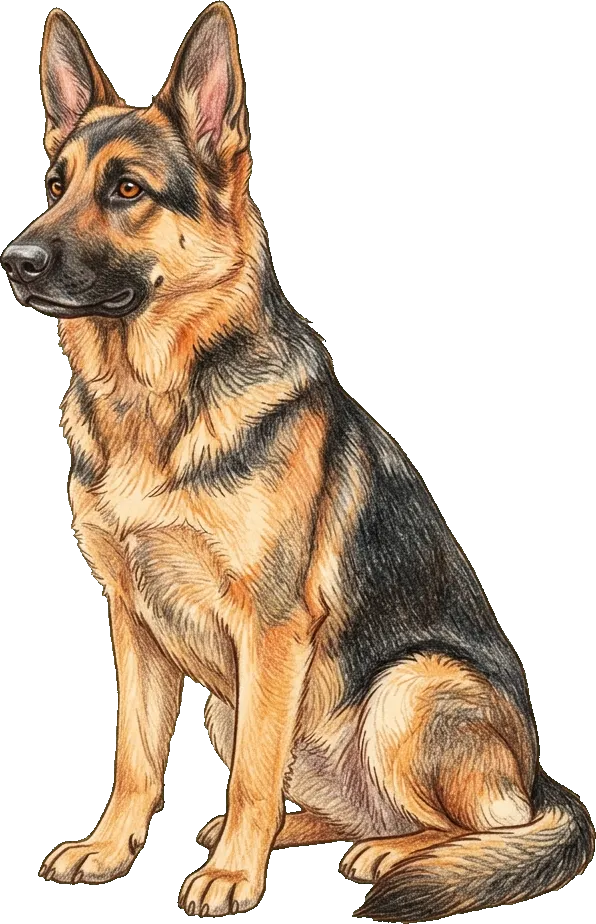
German Shepherd
El German Shepherd es un compañero profundamente leal e inteligente que prospera cuando se le asigna un propósito. Vivir en armonía con uno implica dedicarle tiempo significativo al adiestramiento diario, al ejercicio vigoroso y a gestionar la gran cantidad de pelo que muda. Esta guía se centra en la realidad diaria: desde cómo canalizar su alta energía hasta comprender sus instintos naturales.
Planificadores de cuidado diario
Adiestramiento para ir al baño
Fácil de enseñar a ir al bañoLos Shepherds asimilan las rutinas rápidamente. La etapa más desafiante para enseñar a hacer sus necesidades es la adolescencia (alrededor de los 4 a 6 meses), cuando su concentración puede disminuir temporalmente; mantener los horarios estrictos durante esa fase realmente vale la pena.
Paseos
Necesidad de ejercicio muy altaEstos perros están construidos para la resistencia y destacan cuando sus paseos incluyen estimulación mental: variar las rutas, permitirles pausas para olfatear y agregar breves momentos de adiestramiento los mantiene concentrados y satisfechos. Como adultos, son compañeros excelentes para salir a correr o hacer senderismo. Sin suficiente descarga física y mental, su energía puede volverse rápidamente difícil de manejar dentro de casa.
Planificar paseosTemperamento
Los Shepherds son perros de trabajo que alcanzan su máxima plenitud cuando combinan la actividad mental y física. Muchos dueños integran el adiestramiento de obediencia en sus paseos diarios para satisfacer su constante deseo de aprender y agradar.
Construidos para la resistencia, por lo general se adaptan mejor a una casa con jardín que a un apartamento. Sin una forma adecuada de canalizarla, su inmensa energía puede volverse difícil de gestionar dentro del hogar.
Pueden ser compañeros profundamente devotos, pero son más adecuados para hogares con niños mayores y respetuosos, siempre bajo tu supervisión activa. Dadas sus exigentes necesidades, encajan mucho mejor con dueños experimentados que con personas que tienen un perro por primera vez; de igual forma, siempre es recomendable conocer y evaluar a cada perro individualmente.
Se debe tener precaución con otras mascotas; a menudo son selectivos con perros que no conocen y poseen un alto instinto de presa, lo que hace que la convivencia con gatos sea un reto si no realizas presentaciones cuidadosas y progresivas.
Desarrollado en Alemania a principios del siglo XX por Max von Stephanitz como un perro de pastoreo, este legado de trabajo sigue muy presente en la actualidad. Prosperan de forma excelente en hogares suburbanos con jardín, aunque su espeso pelaje exige que les brindes un ambiente fresco y agradable durante los meses más cálidos.
Lo que la vida con un German Shepherd requiere de ti
Cuidado y pelaje
- Mantenimiento del pelaje
- Mantenimiento moderado
- Caída de pelo
- Pérdida de pelo abundante
- Pelaje
- Pelo medio
Ejercicio y enriquecimiento
- Ejercicio diario
- Necesidad de ejercicio muy alta
- Estimulación mental
- Alta estimulación mental
- Facilidad de adiestramiento
- Deseoso de complacer
Temperamento y sociabilidad
- Con las personas
- Reservado con extraños
- Con otros perros
- Selectivo con otros perros
- Con los niños
- Bien con niños respetuosos (supervisar)
- Ladridos / ruidos
- Vocalización moderada
- Instinto de persecución
- Alto instinto de presa
- Tiempo a solas
- Riesgo moderado de ansiedad por separación
Adaptación al hogar y al clima
- Clima cálido
- Tolerancia moderada al calor
- Clima frío
- Alta tolerancia al frío
- Adiestramiento para ir al baño
- Fácil de enseñar a ir al baño