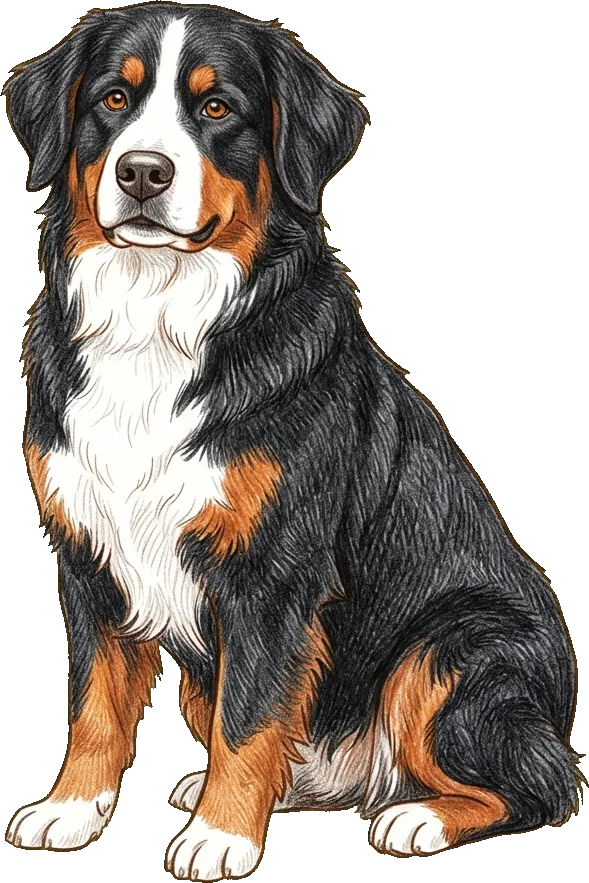
Bernese Mountain Dog
El Bernese Mountain Dog es un gigante amable y entusiasta que disfruta enormemente de ser parte de la familia, aunque convivir con uno implica manejar su abundante muda y mantenerlo en un ambiente fresco. Esta guía se centra en el día a día: cómo enseñarles a hacer sus necesidades durante su prolongada etapa de cachorro, cómo disfrutar del paseo con seguridad mientras crecen, qué temperamento esperar y los chequeos de salud que vale la pena conocer.
Planificadores de cuidado diario
Adiestramiento para ir al baño
Dificultad moderada para enseñar a ir al bañoSon amables y tienen buena disposición, pero su extensa fase de cachorro (hasta 18 meses en razas gigantes) significa que los accidentes pueden aparecer más tarde de lo esperado. Mantener la paciencia durante ese período dará excelentes resultados.
Paseos
Necesidad moderada de ejercicioAdoran el clima fresco y pueden ser excelentes compañeros de excursión en condiciones templadas o frías. Sin embargo, se sofocan fácilmente en verano: programa el paseo para las primeras horas de la mañana o al atardecer durante los meses cálidos y presta atención al jadeo como señal para descansar. Su gran tamaño hace que el cuidado de las articulaciones sea vital en la fase de crecimiento; evita los terrenos de alto impacto mientras sean cachorros. En las condiciones adecuadas, son caminantes entusiastas y resistentes.
Planificar paseosTemperamento
Los Boyeros de Berna están deseosos de complacer y sienten un profundo apego por su familia, ofreciendo un temperamento dócil y dispuesto que va a la par con su imponente tamaño. Debido a que crecen rápidamente pero maduran a paso lento, guiar su extensa etapa de cachorro requiere paciencia.
No exigen carreras interminables, pero sí necesitan una actividad física y mental diaria moderada para ser compañeros tranquilos en casa. Su denso manto doble y su baja tolerancia al calor exigen un ambiente fresco, y su estructura gigante se adapta mucho mejor a un hogar espacioso que a un apartamento reducido.
Su naturaleza entusiasta los hace profundamente cariñosos, pero su gran tamaño requiere supervisión cuando están cerca de niños pequeños para evitar golpes accidentales. Crean lazos muy estrechos con su familia y pueden pasarlo mal si se sienten aislados; prosperan mejor en hogares que brindan una compañía constante y un adiestramiento amable.
Gracias a un bajo instinto de caza y a una actitud naturalmente sociable hacia otros perros, suelen integrarse pacíficamente en hogares con varias mascotas. Las presentaciones supervisadas les ayudan a aprender a compartir el espacio de forma respetuosa con gatos y animales más pequeños.
Criados como perros de tiro y de granja en los Alpes suizos, su complexión robusta los convierte en compañeros naturales para el clima frío y las actividades de invierno. Aunque les encanta tener una tarea suave durante las excursiones frescas, debes ser proactivo para evitar que sufran golpes de calor durante los meses cálidos de verano.
Lo que la vida con un Bernese Mountain Dog requiere de ti
Cuidado y pelaje
- Mantenimiento del pelaje
- Mantenimiento alto
- Caída de pelo
- Pérdida de pelo abundante
- Pelaje
- Pelo largo
Ejercicio y enriquecimiento
- Ejercicio diario
- Necesidad moderada de ejercicio
- Estimulación mental
- Estimulación mental moderada
- Facilidad de adiestramiento
- Deseoso de complacer
Temperamento y sociabilidad
- Con las personas
- Entusiasta y amigable
- Con otros perros
- Sociable con otros perros
- Con los niños
- Bien con niños respetuosos (supervisar)
- Ladridos / ruidos
- Vocalización moderada
- Instinto de persecución
- Bajo instinto de presa
- Tiempo a solas
- Riesgo moderado de ansiedad por separación
Adaptación al hogar y al clima
- Clima cálido
- Baja tolerancia al calor
- Clima frío
- Alta tolerancia al frío
- Adiestramiento para ir al baño
- Dificultad moderada para enseñar a ir al baño